Finding Belonging in the Orange Bubble (2025)
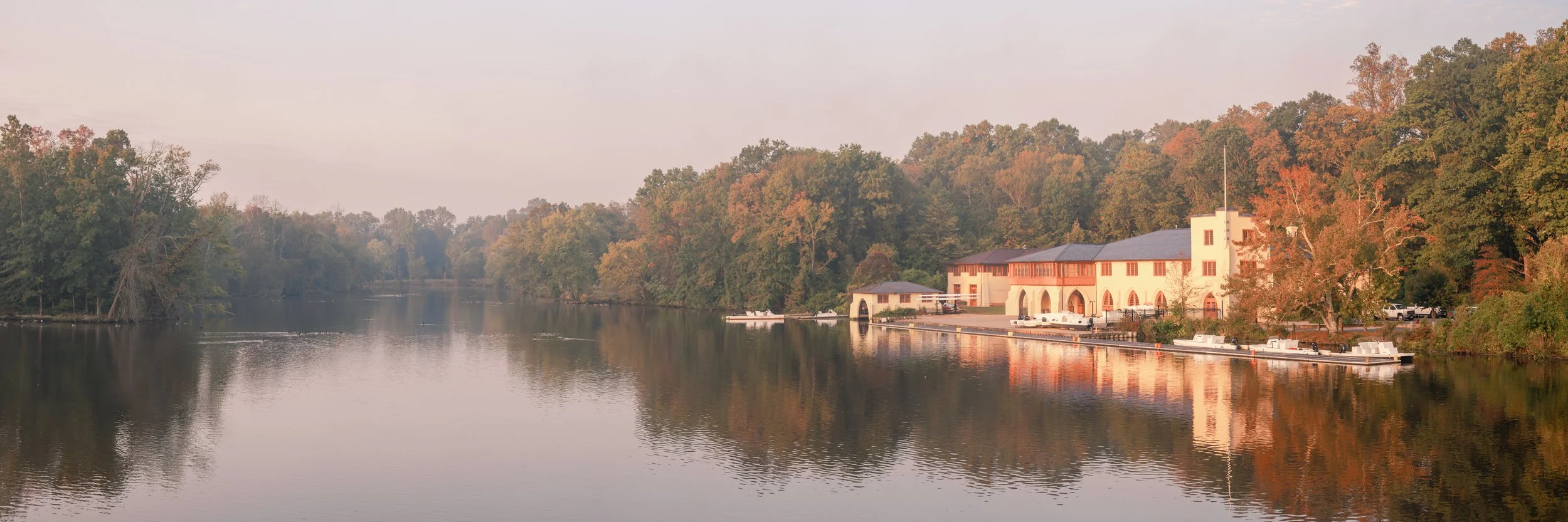
Lake Carnegie in Princeton, NJ

 “It's not an individual accomplishment, it really does take a village.”

-Wangari Karani

Introduction To Summer 2025

Together, these narratives deepen understanding of how alumni experiences both shape and are shaped by their time at the University. This iteration advances Brave Voices’ ongoing commitment to documentation, preservation, and representation. By capturing contemporary alumni perspectives, the project strengthens the existing archive and contributes to a more comprehensive understanding of the diverse experiences that define Princeton’s institutional history.

These stories explore themes of belonging, identity, and the transformative impact of being seen and heard within the University community. The collection highlights the relationship between belonging and stratification, exploring how connection, recognition, and shared experience emerge as alumni navigate structures of difference within the campus community.

Building upon the original 2018–2019 collection, the Brave Voices Project expanded its archive in Summer 2025 through filmed and audio interviews with Princeton alumni, accompanied by a curated photo campaign.

This collection was made possible through the Aspiring Scholars and Professionals (ASAP) program at the Emma Bloomberg Center for Access & Opportunity, whose support enabled the continuation and expansion of this multimedia initiative.


Docuseries

Click each bubble for an episode of the docuseries. You may watch in number order, or choose what theme speaks to you the most! Watch the trailer below for a sneak peek…

Trailer for Summer 2025 Brave Voices Project “Finding Beloning in the Orange Bubble”
Photo Campaign
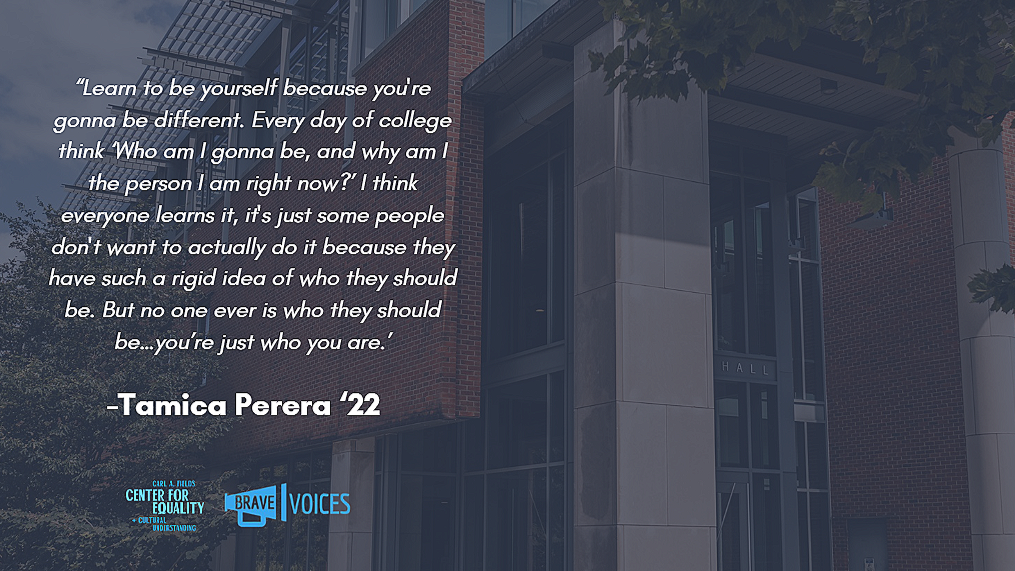
Tamica Perera '22: “Learn to be yourself because you're gonna be different. Every day of college think ‘Who am I gonna be, and why am I the person I am right now?’ I think everyone learns it, it's just some people don't want to actually do it..."
"...because they have such a rigid idea of who they should be. But no one ever is who they should be…you’re just who you are.” -Tamica Perera '22
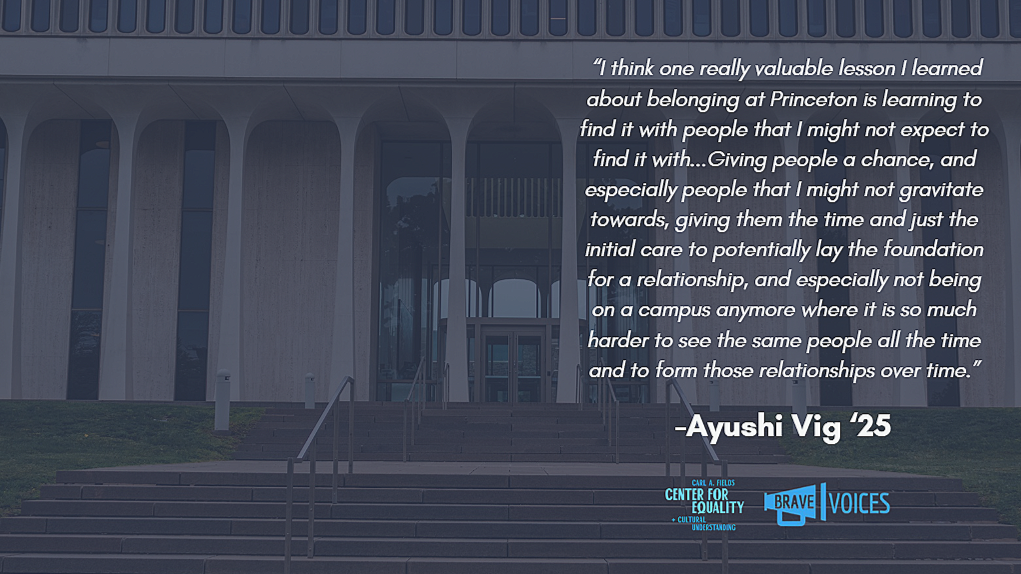
Ayushi Vig '25: “I think one really valuable lesson I learned about belonging at Princeton is learning to find it with people that I might not expect to find it with...Giving people a chance, and especially people that I might not gravitate towards"
"giving them the time and just the initial care to potentially lay the foundation for a relationship, and especially not being on a campus anymore where it is so much harder to see the same people all the time." -Ayushi Vig '25
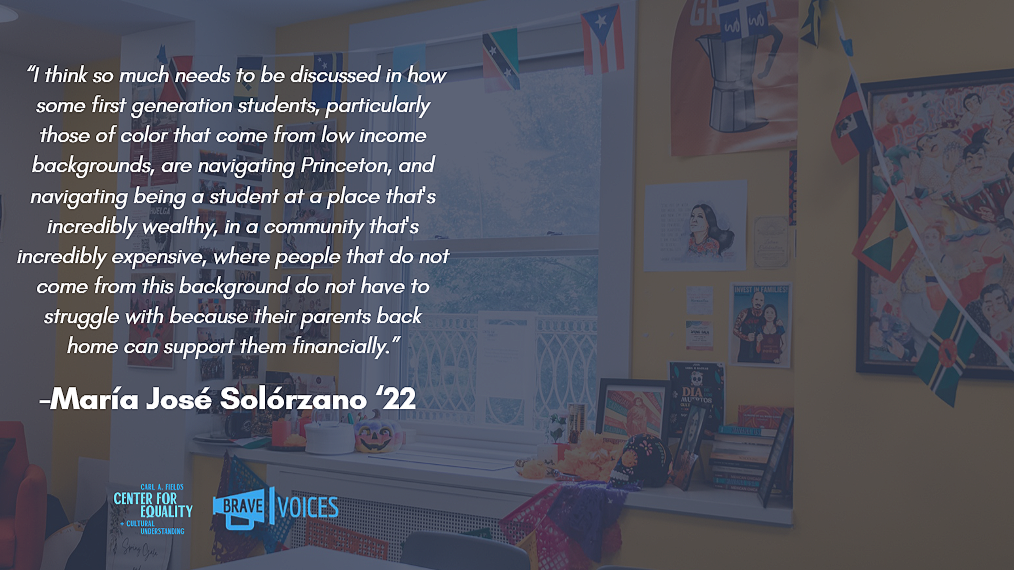
María José Solórzano ‘22: “I think so much needs to be discussed in how some first generation students, particularly those of color that come from low income backgrounds, are navigating Princeton, and navigating being a student at a place that's..."
incredibly wealthy, in a community that's incredibly expensive, where people that do not come from this background do not have to struggle with because their parents back home can support them financially.” -María José Solórzano ‘22
Afzal Hussain '25: “More people should check out the Carl A. Fields Center...everything makes you realize that you are a part of a long line of Princetonians from certain backgrounds that have navigated this institution. And even if you leave..."
"other people like you will fill these shoes, and you should try to make this place a little bit better-even if you can't change the overall campus culture-change a tiny pocket of campus that someone else can come and enjoy like you.” -Afzal H. '25
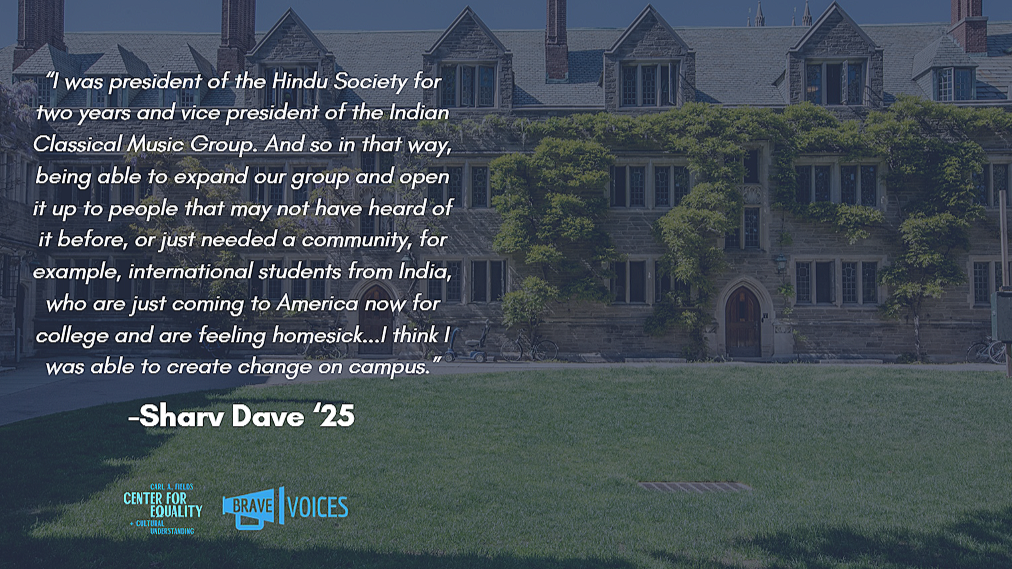
Sharv Dave '25: “I was president of the Hindu Society for two years and vice president of the Indian Classical Music Group. And so in that way, being able to expand our group and open it up to people that may not have heard of it before, or just..."
"needed a community, for example, international students from India, who are just coming to America now for college and are feeling homesick...I think I was able to create change on campus.” - Sharv Dave '25
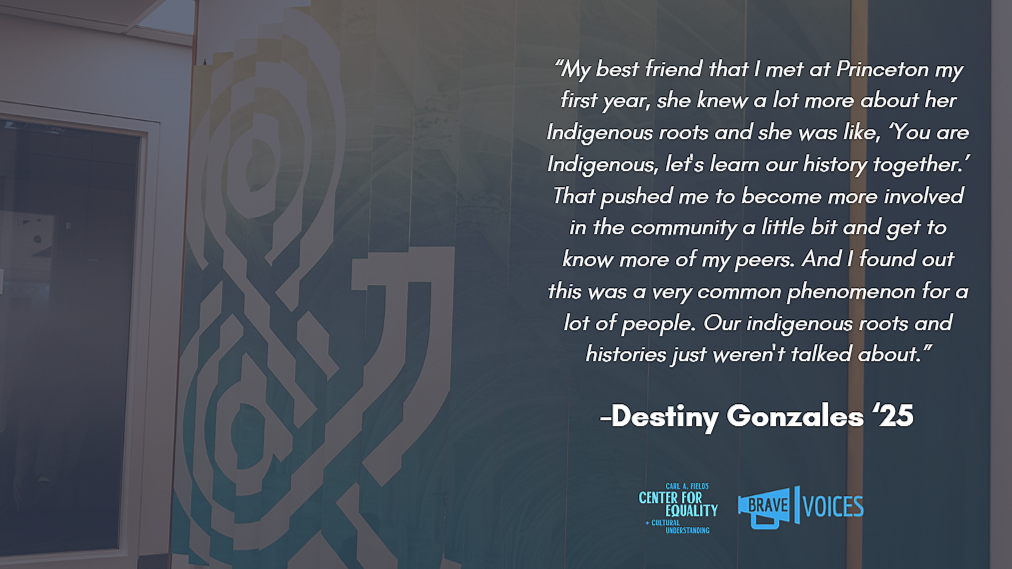
Destiny Gonzales '25: “My best friend that I met at Princeton my first year, she knew a lot more about her Indigenous roots and she was like, ‘You are Indigenous, let's learn our history together.’ That pushed me to become more involved in the..."
community a little bit and get to know more of my peers. And I found out this was a very common phenomenon for a lot of people. Our indigenous roots and histories just weren't talked about.” -Destiny Gonzales '25
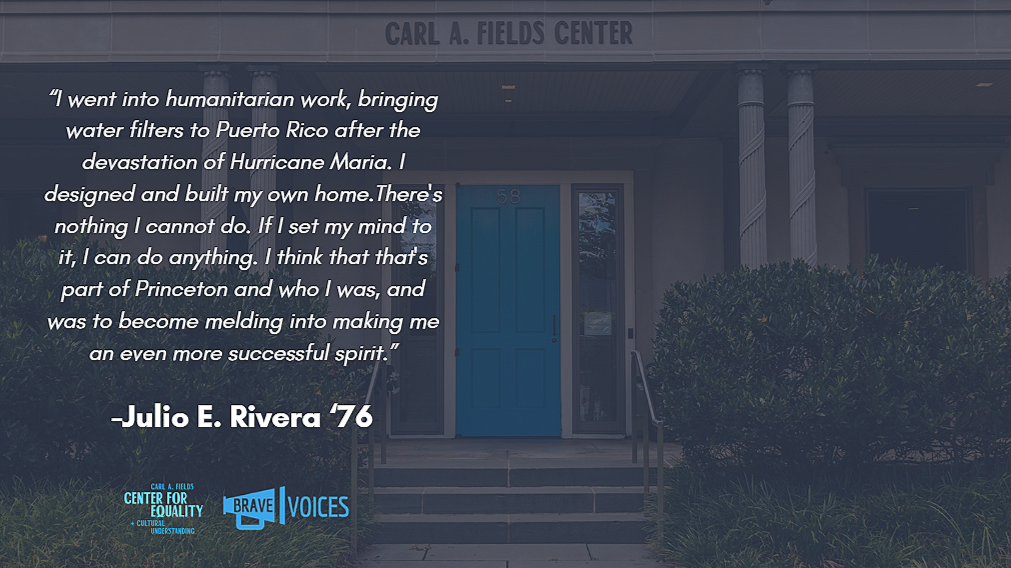
Julio E. Rivera '76: “I went into humanitarian work, bringing water filters to Puerto Rico after the devastation of Hurricane Maria. I designed and built my own home. There's nothing I cannot do."
"If I set my mind to it, I can do anything. I think that that's part of Princeton and who I was, and was to become melding into making me an even more successful spirit.” -Julio E. Rivera '76
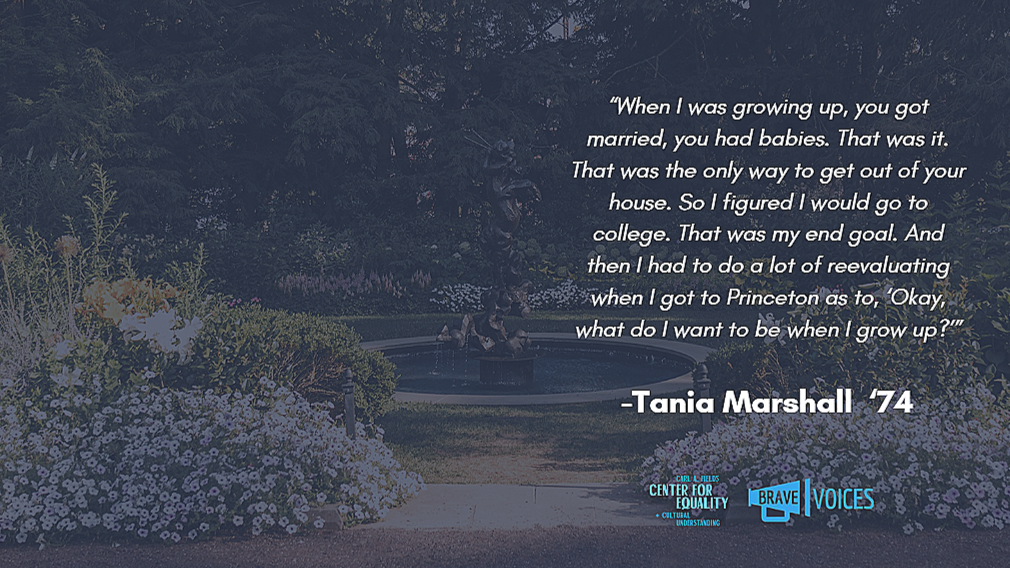
Tania Marshall '74: “When I was growing up, you got married, you had babies. That was it. That was the only way to get out of your house. So I figured I would go to college. That was my end goal."
"And then I had to do a lot of reevaluating when I got to Princeton as to, ‘Okay, what do I want to be when I grow up?’” -Tania Marshall '74
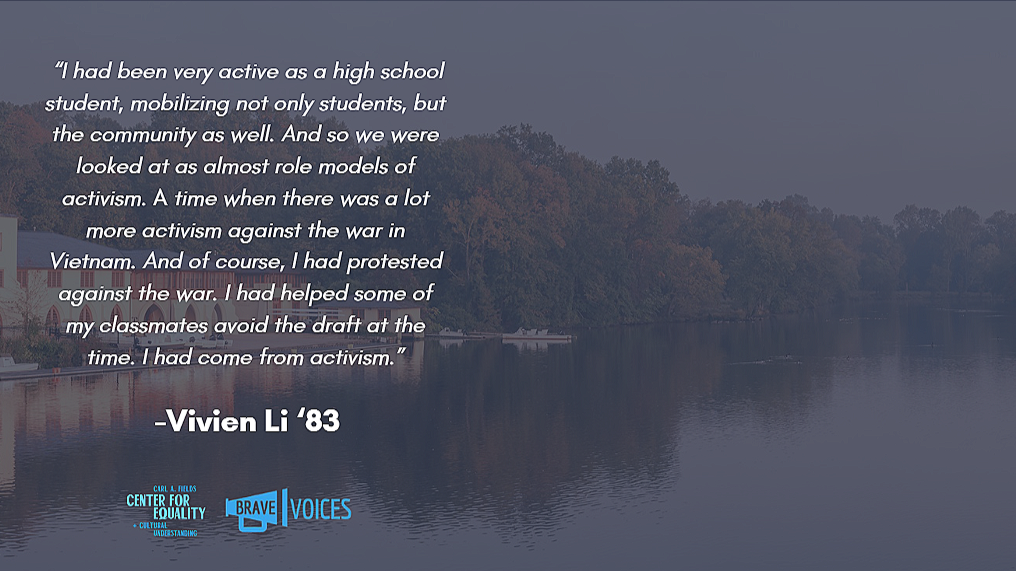
Vivien Li '83: “I had been very active as a high school student, mobilizing not only students, but the community as well. And so we were looked at as almost role models of activism. A time when there was a lot more activism against the war in Vietnam
"And of course, I had protested against the war. I had helped some of my classmates avoid the draft at the time. I had come from activism.” -Vivien Li '83
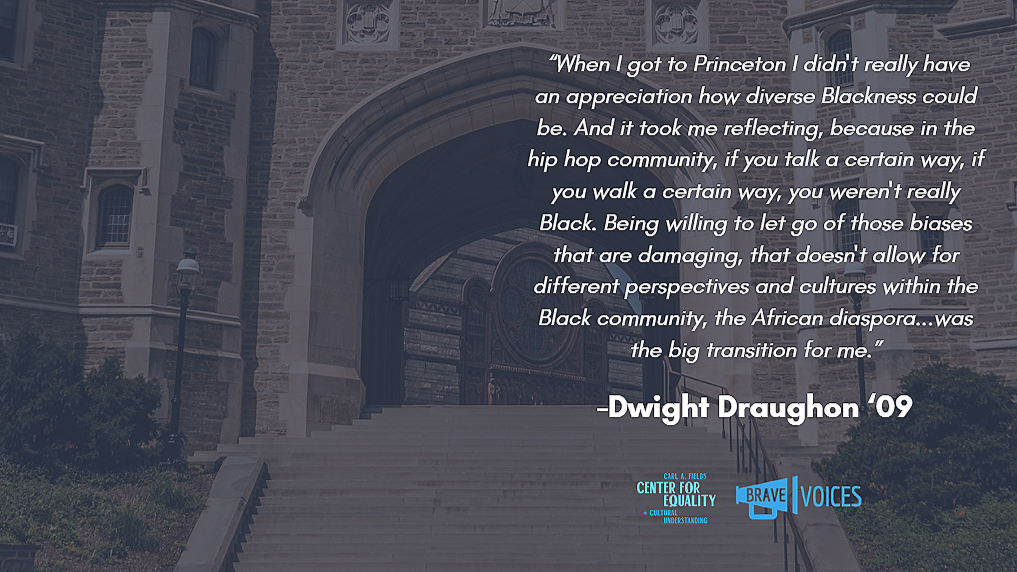
Dwight Draughon '09: “When I got to Princeton I didn't really have an appreciation how diverse Blackness could be. And it took me reflecting, because in the hip hop community, if you talk a certain way, if you walk a certain way..."
"...you weren't really Black. Being willing to let go of those biases that are damaging, that doesn't allow for different perspectives and cultures within the Black community, the African diaspora...was the big transition for me.” Dwight Draughon '09
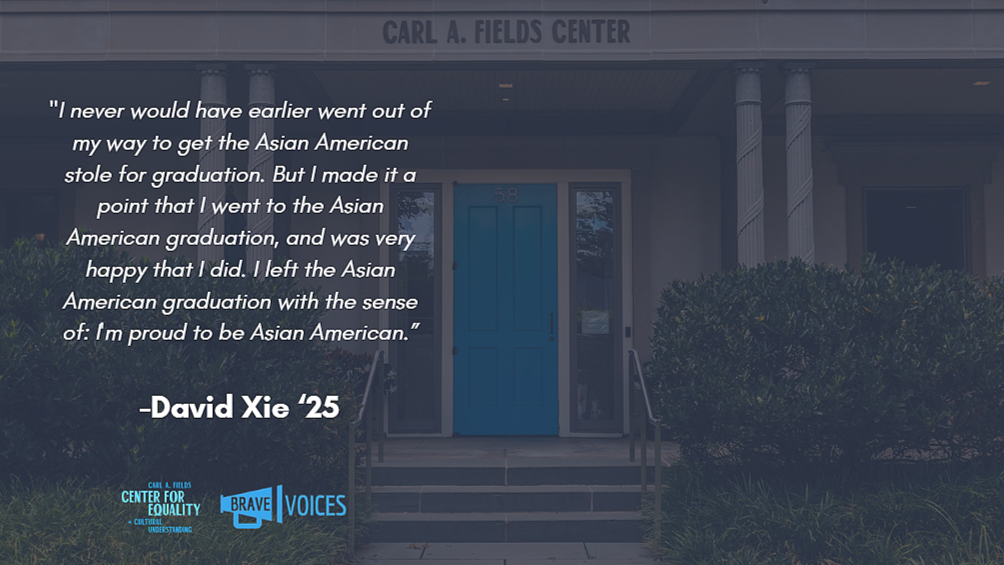
David Xie '25: "I never would have earlier went out of my way to get the Asian American stole for graduation. But I made it a point that I went to the Asian American graduation..."
"and was very happy that I did. I left the Asian American graduation with the sense of: I'm proud to be Asian American.” -David Xie '25
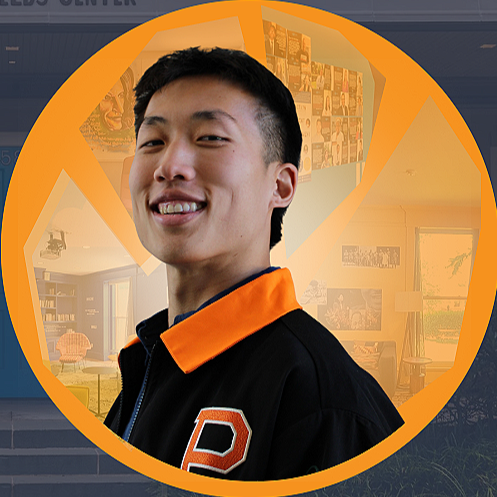
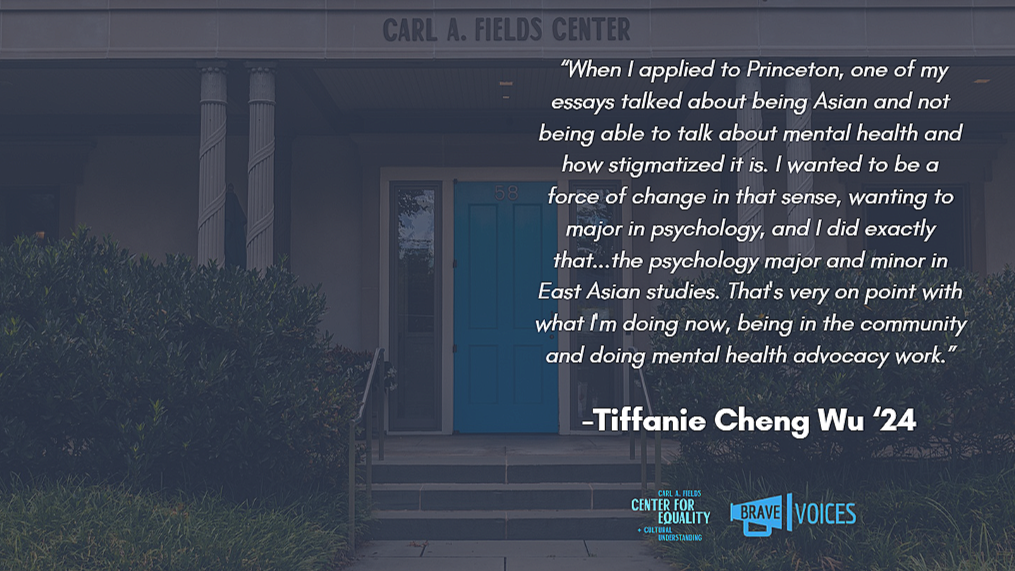
Tiffanie Cheng Wu '24: “When I applied to Princeton, one of my essays talked about being Asian and not being able to talk about mental health and how stigmatized it is. I wanted to be a force of change in that sense, wanting to major in psychology.."
"...and I did exactly that...the psychology major and minor in East Asian studies. That's very on point with what I'm doing now, being in the community and doing mental health advocacy work.”
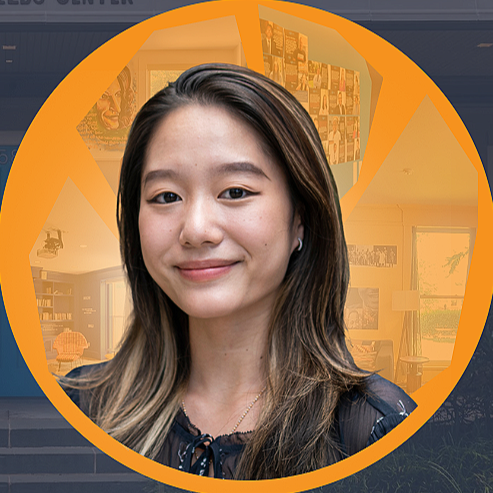
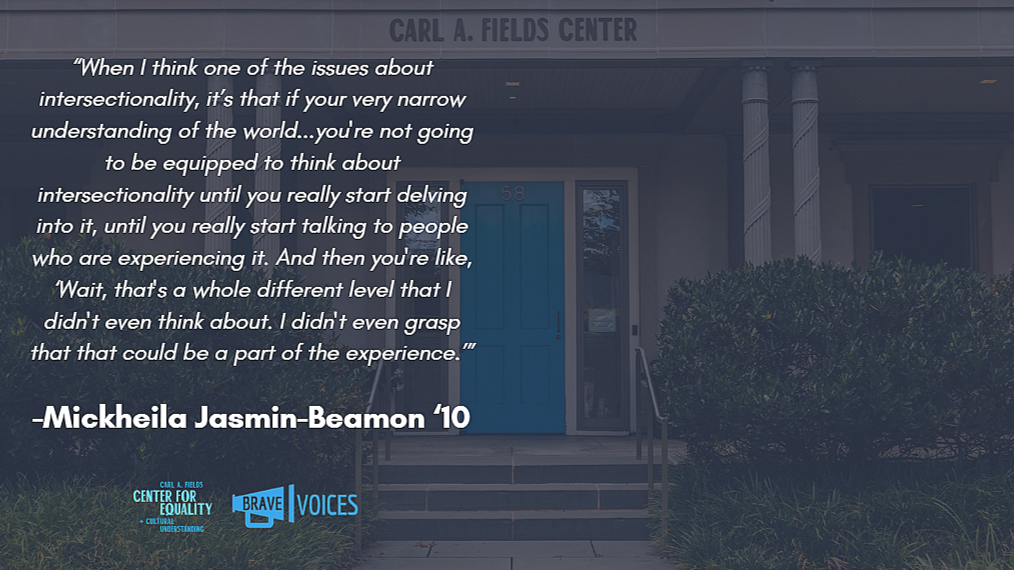
Mickheila Jasmin-Beamon '10: When I think one of the issues about intersectionality, it’s that if your very narrow understanding of the world...you're not going to be equipped to think about intersectionality until you really start delving into it.."
until you really start talking to people who are experiencing it. And then you're like, ‘Wait, that's a whole different level that I didn't even think about. I didn't even grasp that that could be a part of the experience.’” -Mickheila '10
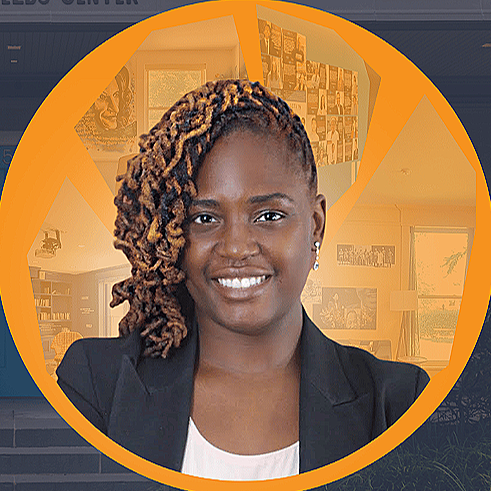
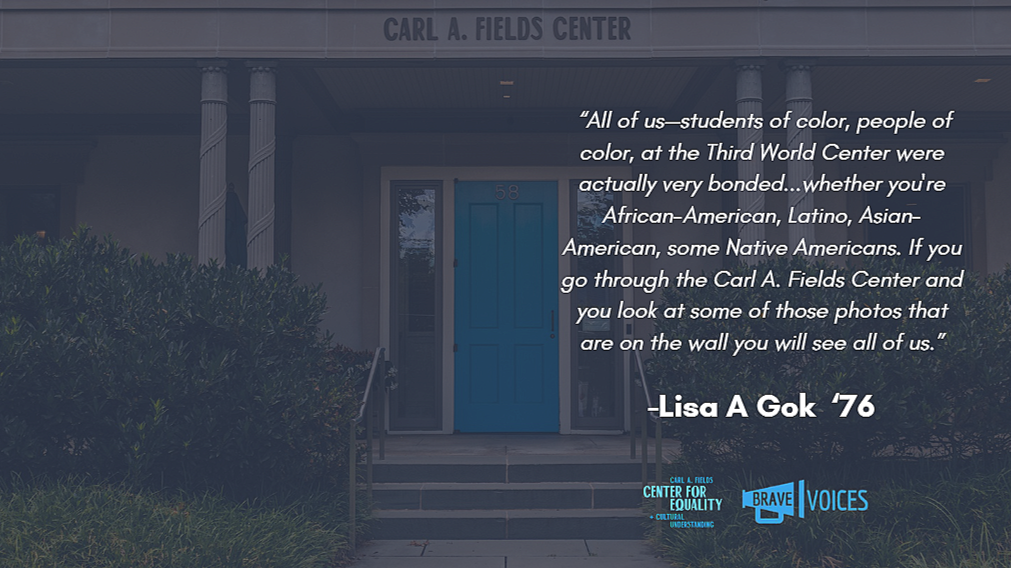
Lisa A. Gok '76: “All of us—students of color, people of color, at the Third World Center were actually very bonded...whether you're African-American, Latino, Asian-American, some Native Americans."
If you go through the Carl A. Fields Center and you look at some of those photos that are on the wall you will see all of us.” -Lisa A. Gok '76
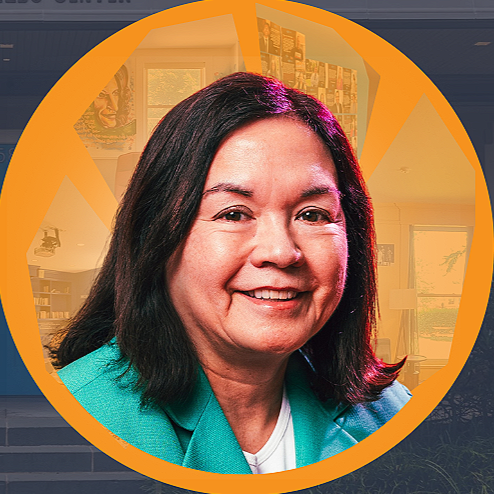
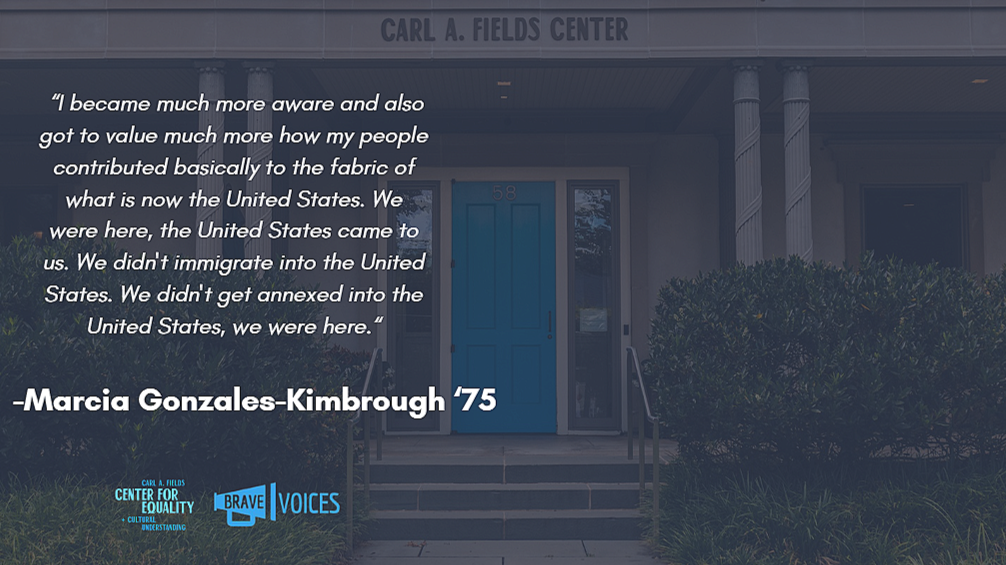
Marcia Gonzales-Kimbrough '75: “I became much more aware and also got to value much more how my people contributed basically to the fabric of what is now the United States. We were here, the United States came to us. "
We didn't immigrate into the United States. We didn't get annexed into the United States, we were here.“ -Marcia Gonzales-Kimbrough '75
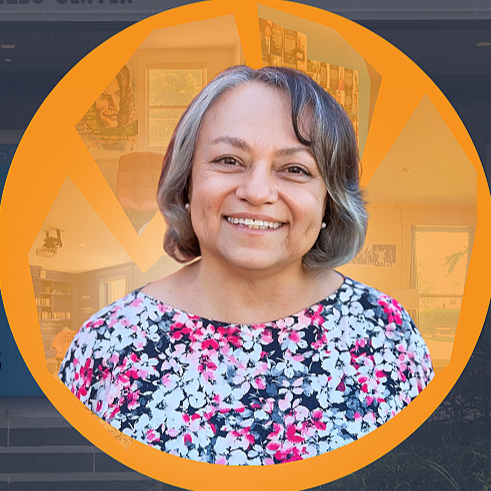
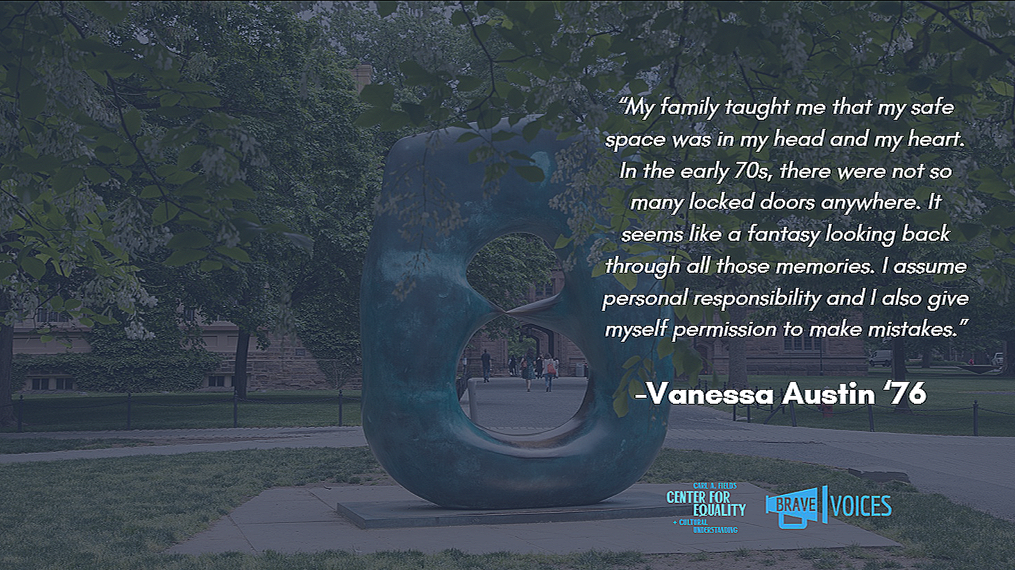
Vanessa Austin '76: “My family taught me that my safe space was in my head and my heart. In the early 70s, there were not so many locked doors anywhere. It seems like a fantasy looking back through all those memories."
I assume personal responsibility and I also give myself permission to make mistakes.” -Vanessa Austin '76
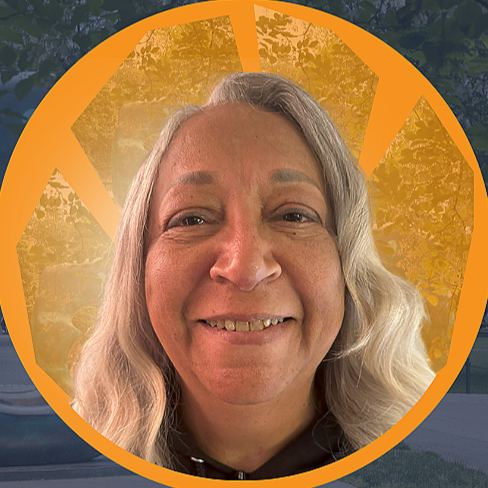
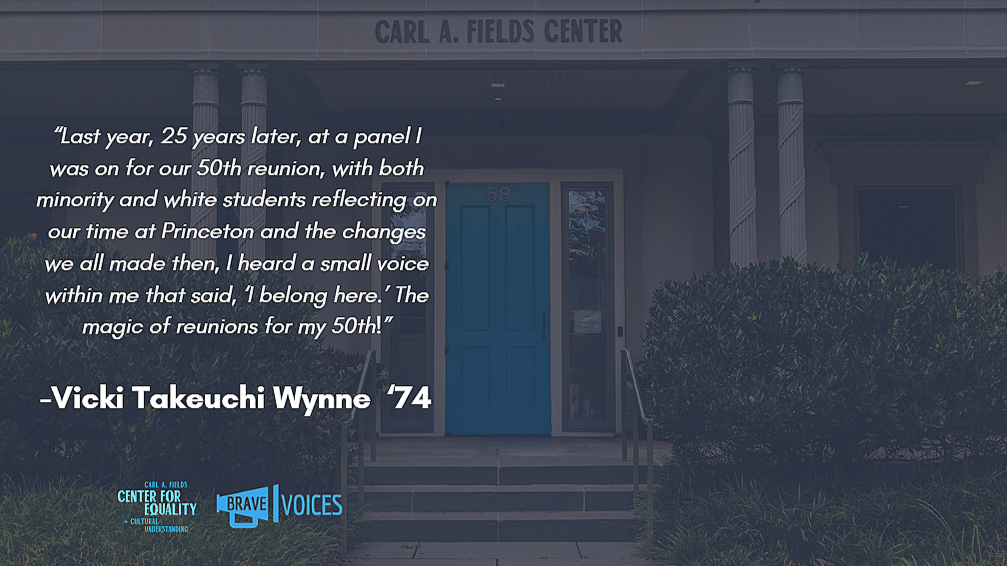
Vicki Takeuchi Wynne '74: “Last year, 25 years later, at a panel I was on for our 50th reunion, with both minority and white students reflecting on our time at Princeton and the changes we all made then..."
"I heard a small voice within me that said, ‘I belong here.’ The magic of reunions for my 50th!” -Vicki Takeuchi Wynne '74

The Summer 2025 collection was conducted by Allen Macaraeg of Montclair State University and Sarah Ahmad of Rutgers University, whose care, creativity, and dedication shaped every stage of the project from interviews and filming to audio editing and the photo campaign. Their work contributes meaningfully to the preservation of alumni narratives and to the continued growth of the Brave Voices archive.