
Stories in Motion (2018)
Launched in 2018 by the Carl A. Fields Center, the inaugural Brave Voices collection centers the lived experiences of Princeton alumni of color who graduated between 1990 and 2018. Through a powerful photo campaign and video documentary, this collection explores how identity across race, religion, gender identity, class, sexual orientation, and more shaped alumni experiences at Princeton University, and how these alumni, in turn, shaped the University.
While early civil rights history at Princeton has been documented, narratives from the 1990s to the 2000s have often remained scattered or untold. This collection preserves those recent histories including stories of activism, belonging, resilience, joy, and transformation. By gathering these narratives, Brave Voices created an intergenerational archive that deepens our understanding of Princeton’s evolving campus climate and honors the communities pushing toward greater inclusion.
Begin with the stories below, click each image to expand and read, then watch the full video documentary to experience the collection.
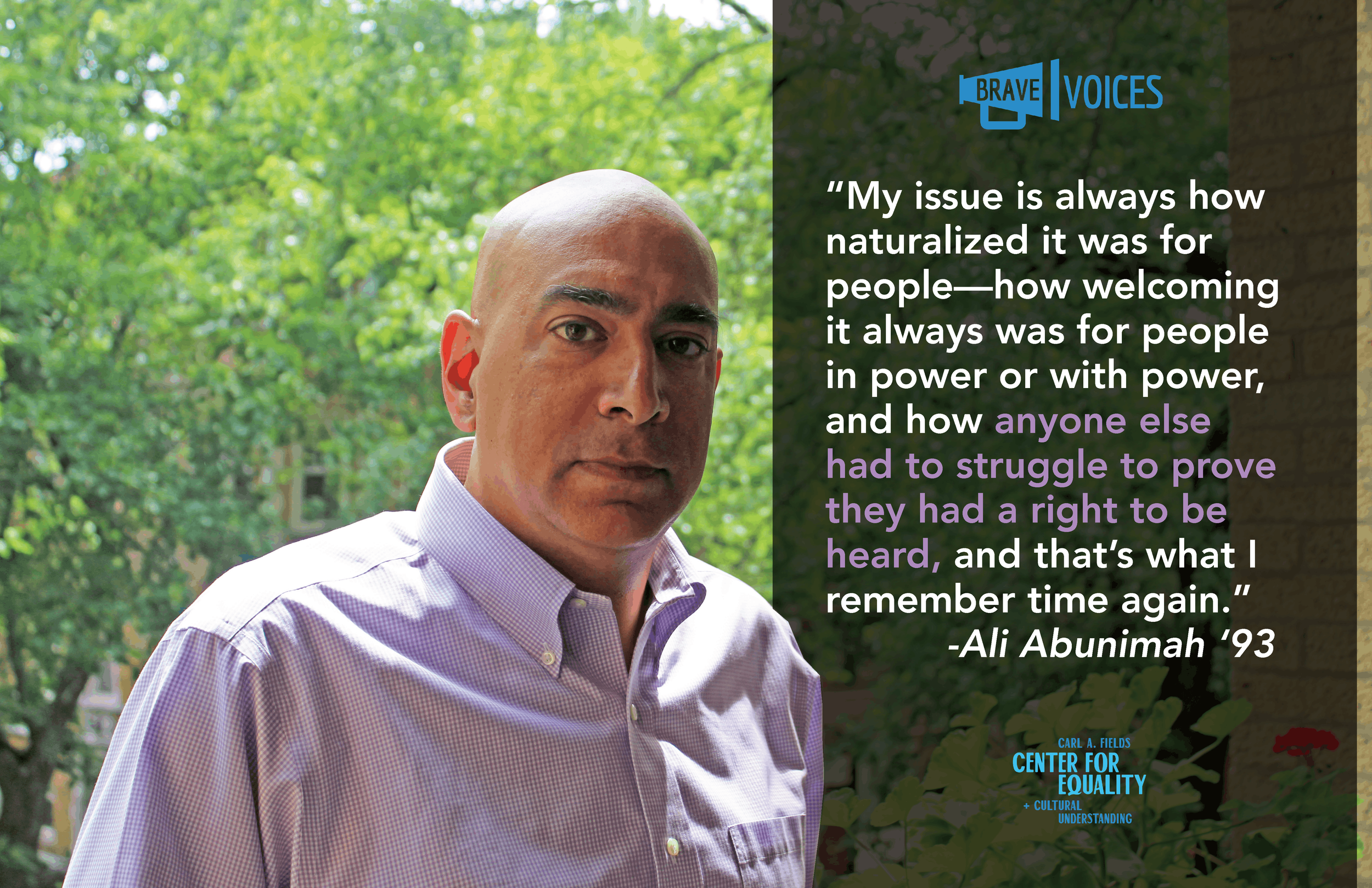
“My issue is always how naturalized it was for people—how welcoming it always was for people in power or with power, and how anyone else had to struggle to prove they had a right to be heard, and that’s what I remember time again.” -Ali Abuminah '93
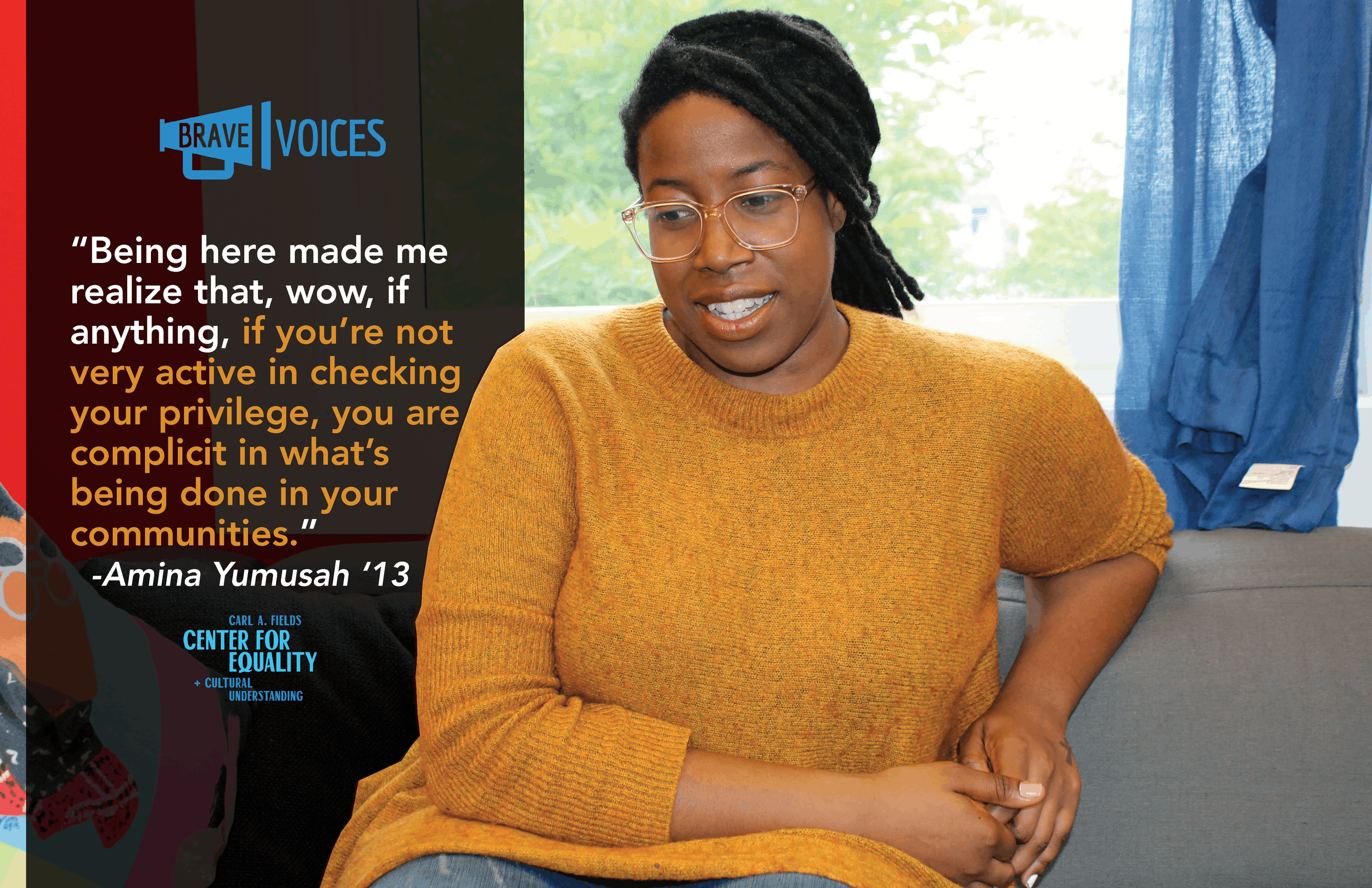
“Being here made me realize that, wow, if anything, if you’re not very active in checking your privilege, you are complicit in what’s being done in your communities.” -Amina Yumusah ‘13
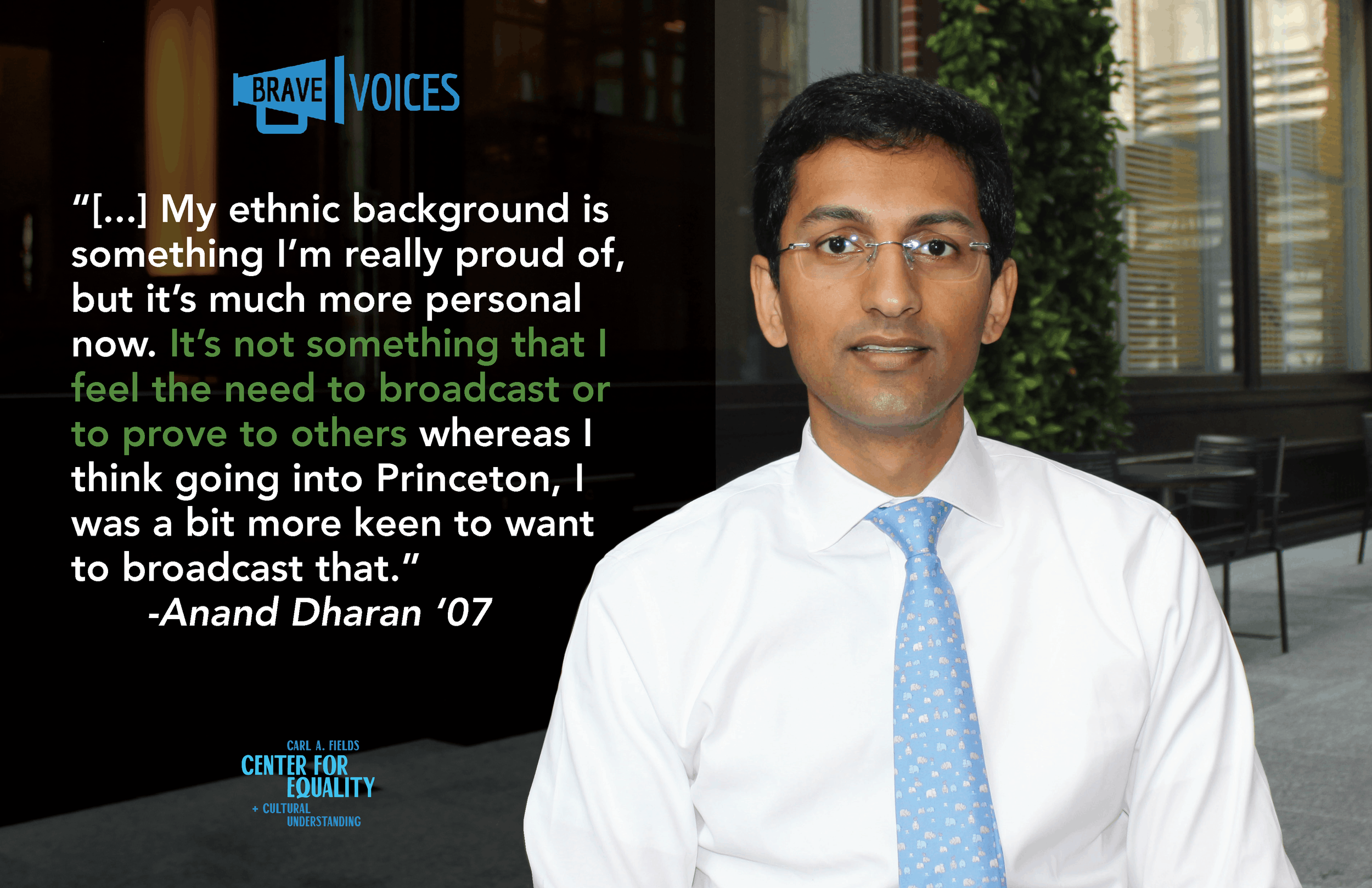
“My ethnic background is something I’m really proud of, but it’s much more personal now. It’s not something that I feel the need to broadcast or to prove to others whereas I think going into Princeton, I was a bit more keen to want to broadcast that.” -Anand Dharan ‘07
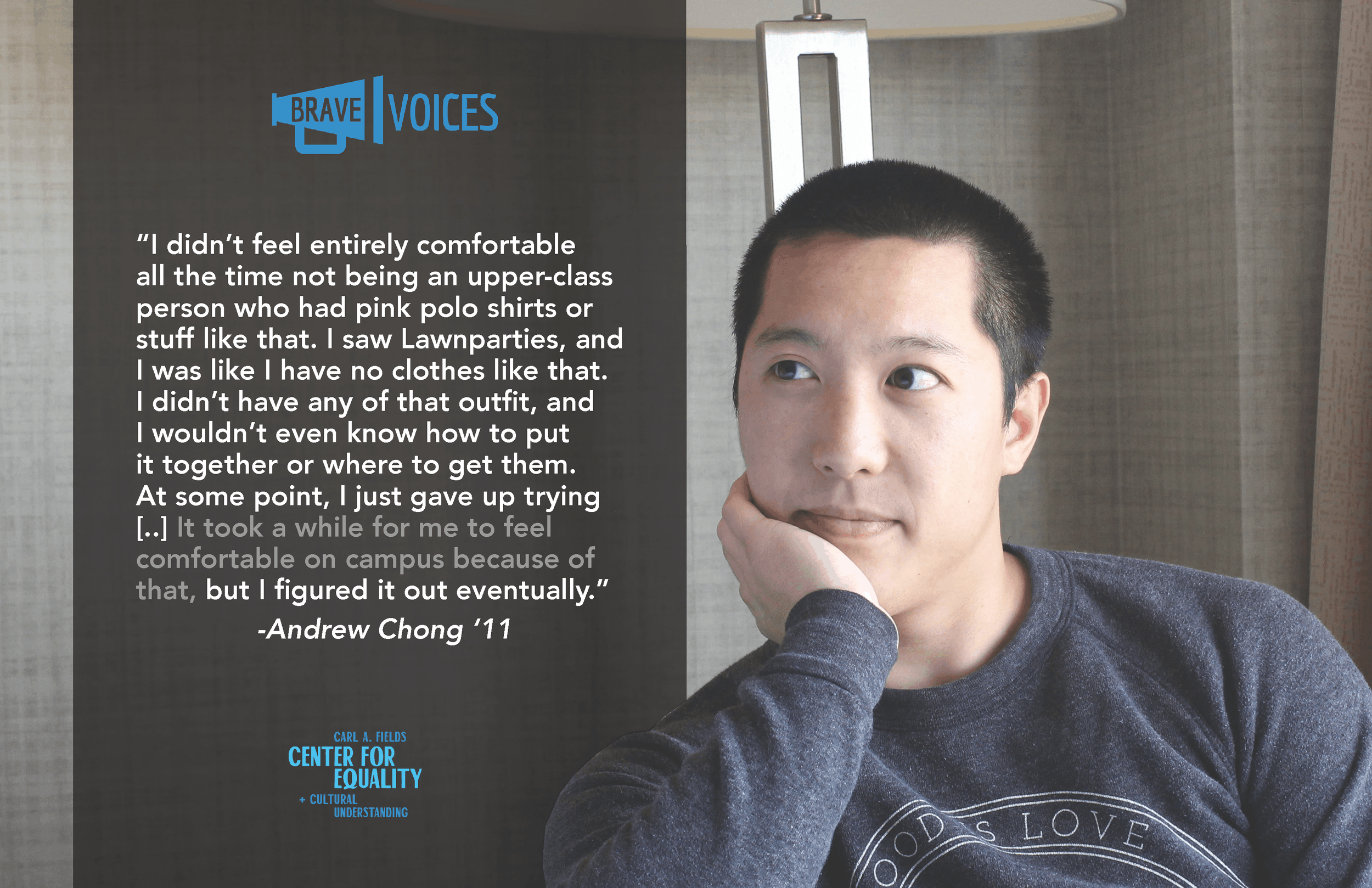
“I didn’t feel entirely comfortable all the time not being an upper-class person who had pink polo shirts or stuff like that. I saw Lawnparties, and I was like I have no clothes like that. I didn’t have any of that outfit, and I wouldn’t even know how to put it together or where to get them. At some point, I just gave up trying [..] It took a while for me to feel comfortable on campus because of that, but I figured it out eventually.” -Andrew Chong ‘11
![“Coming from a public high school
in the south, of course there was an
academic adjustment that needed
to happen quickly. [...] There was a
social adjustment as well. For the
first time in my life, I was exposed
to people who blew me off because
I wa](https://images.squarespace-cdn.com/content/v1/6989d84dfa66276e713bec20/2ada462e-6271-40e9-b9ff-4c620e5ef5e6/David+Marshall+Poster+Final+%281%29.png)
“Coming from a public high school in the south, of course there was an academic adjustment that needed to happen quickly. [...] There was a social adjustment as well. For the first time in my life, I was exposed to people who blew me off because I wasn’t as smart, wealthy, or well connected as they were. As I mentioned earlier, I discovered that as a person of color from the south, I was pretty low on the totem pole.” -David Marshall ‘93
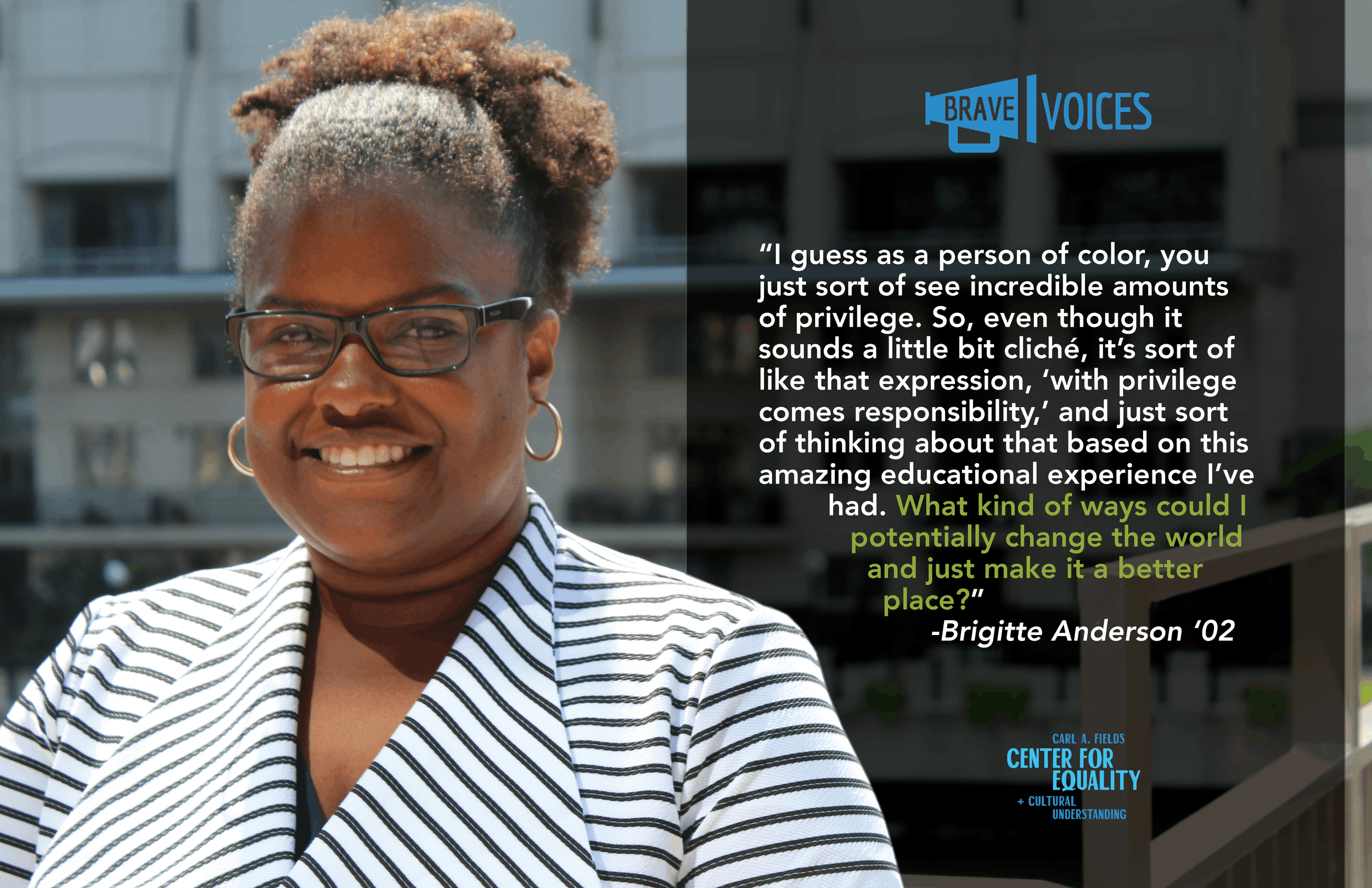
“I guess as a person of color, you just sort of see incredible amounts of privilege. So, even though it sounds a little bit cliché, it’s sort of like that expression, ‘with privilege comes responsibility,’ and just sort of thinking about that based on this amazing educational experience I’ve had. What kind of ways could I potentially change the world and just make it a better place?” -Brigitte Anderson ‘02
![“I would like students of color to take
ownership of Princeton. It is your
university [...] You can do what you want.
You can start something that hasn’t been
done before. You can do something that’s
been done a thousand times. Don’t feel
burdened by](https://images.squarespace-cdn.com/content/v1/6989d84dfa66276e713bec20/22f9a42f-8b8a-4b17-b9ea-6bf77e316695/Brigitte+White+Poster+Final.png)
“I would like students of color to take ownership of Princeton. It is your university [...] You can do what you want. You can start something that hasn’t been done before. You can do something that’s been done a thousand times. Don’t feel burdened by the history [...] I think take ownership of the university. Make it your own, and don’t feel ashamed. Don’t feel embarrassed. Feel comfortable in your skin, and know that for every struggle, there are several generations who were doing even much more and the same and would be so proud of you.” -Brigitte White Zivkovic ‘00
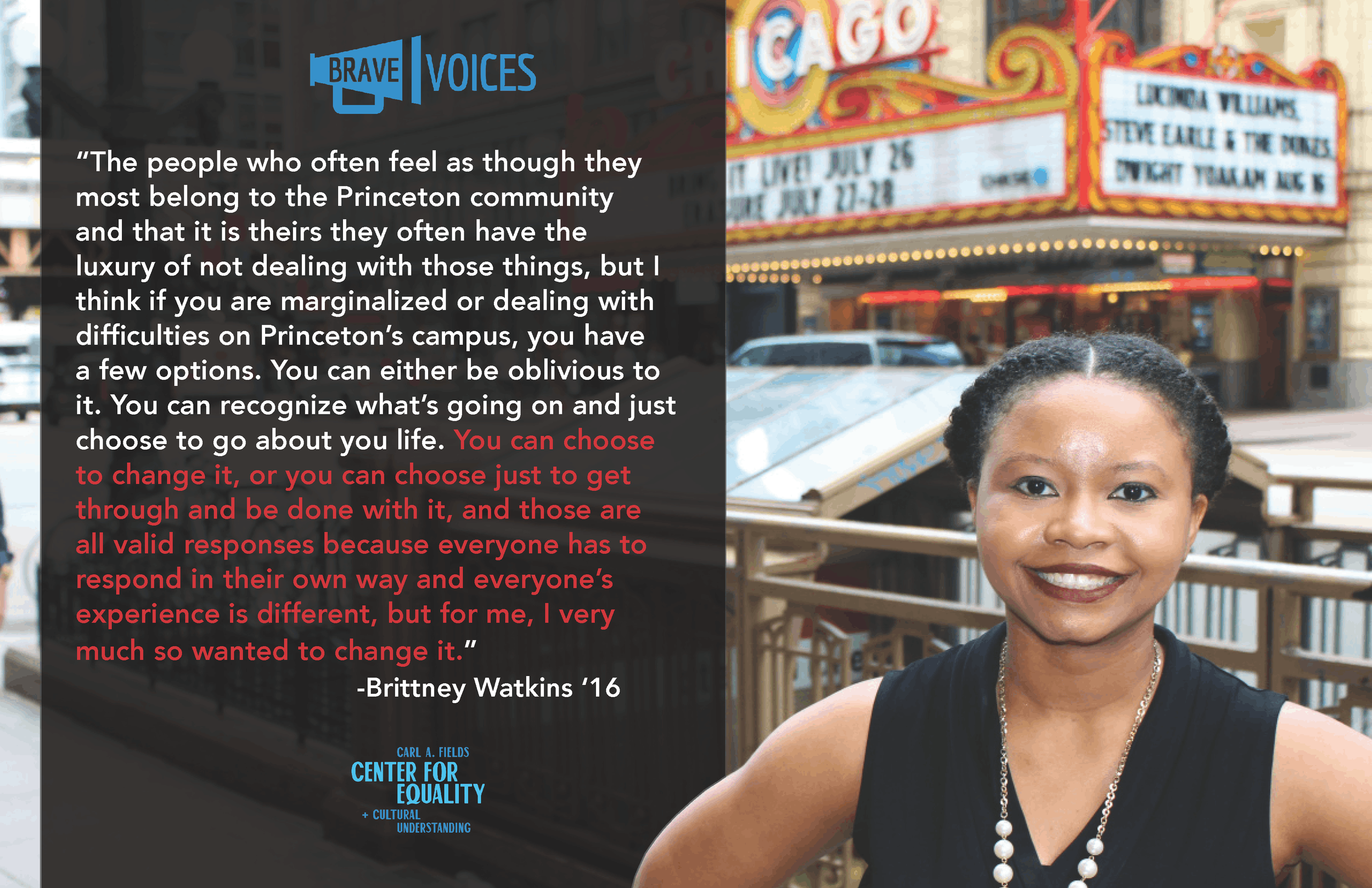
“The people who often feel as though they most belong to the Princeton community and that it is theirs they often have the luxury of not dealing with those things, but I think if you are marginalized or dealing with difficulties on Princeton’s campus, you have a few options. You can either be oblivious to it. You can recognize what’s going on and just choose to go about you life. You can choose to change it, or you can choose just to get through and be done with it, and those are all valid responses because everyone has to respond in their own way and everyone’s experience is different, but for me, I very much so wanted to change it.” -Brittney Watkins ‘16
![“I think for so long, Black
people have been oppressed
and excluded and killed, [so]
any piece of goodness feels like
freedom, and it’s not. While
I’m grateful and proud of my
accomplishments at Princeton, I
don’t want that to be freedom,
like, I don](https://images.squarespace-cdn.com/content/v1/6989d84dfa66276e713bec20/49a9a2c1-7e44-43ff-95fc-8cabdb414366/Cameron+Bell+Poster+Final.png)
“I think for so long, Black people have been oppressed and excluded and killed, [so] any piece of goodness feels like freedom, and it’s not. While I’m grateful and proud of my accomplishments at Princeton, I don’t want that to be freedom, like, I don’t want that to be the pinnacle.” -Cameron Bell ‘16
![“[Princeton is] harsher than
I feel like it’s fair, but that
was the kind of experience.
We’re like, we’re here and I’m
getting something from this
but this doesn’t feel like an
institution that was especially
designed to support me.
So, with all tho](https://images.squarespace-cdn.com/content/v1/6989d84dfa66276e713bec20/ef7a19a3-aca4-47b0-a63b-cb52c97d2d55/Chris+Wheat+Poster+Final.png)
“[Princeton is] harsher than I feel like it’s fair, but that was the kind of experience. We’re like, we’re here and I’m getting something from this but this doesn’t feel like an institution that was especially designed to support me. So, with all those caveats maybe not for us is what I would sort of stick with.” -Chris Wheat ‘95
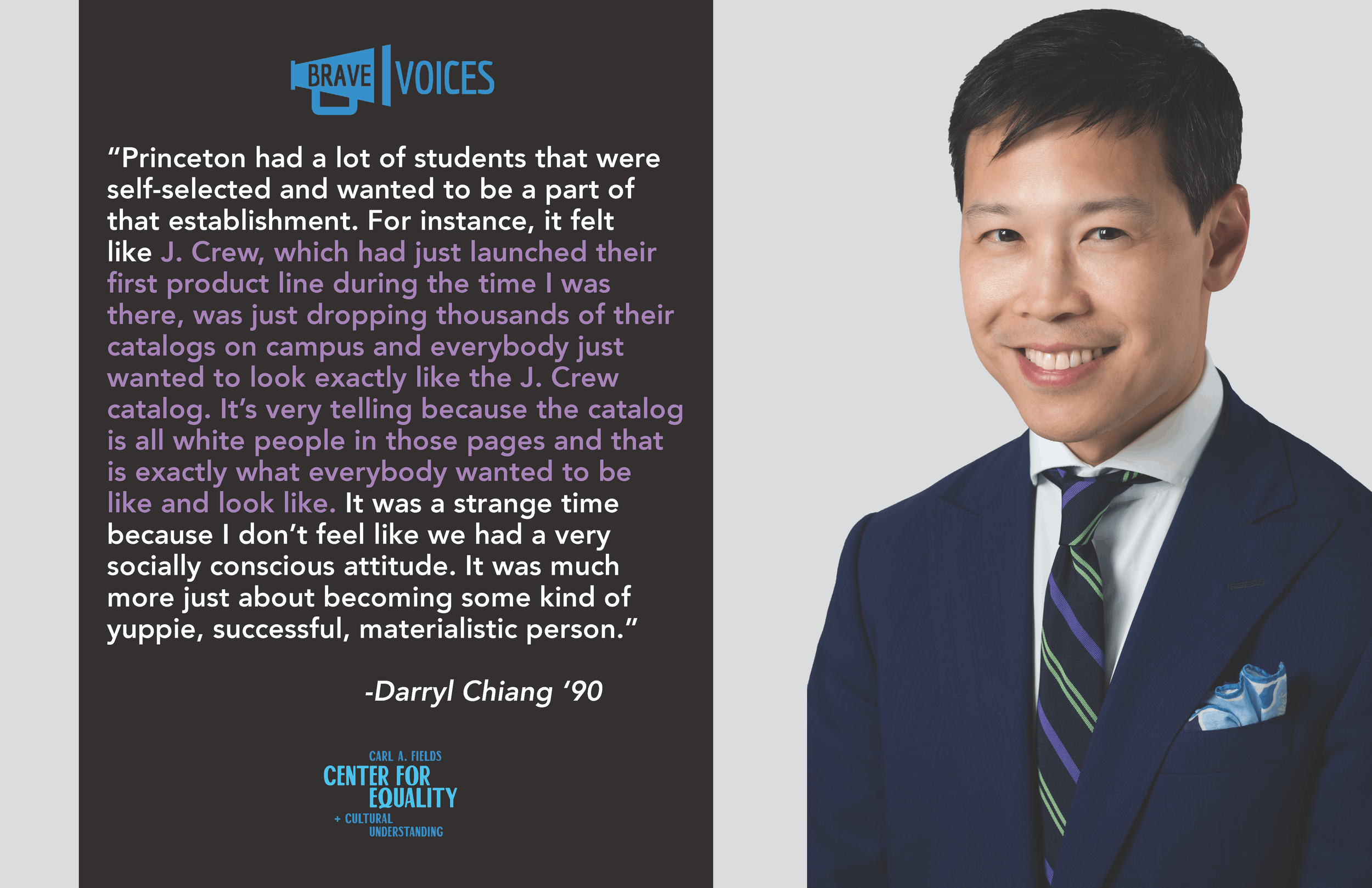
“Princeton had a lot of students that were self-selected and wanted to be a part of that establishment. For instance, it felt like J. Crew, which had just launched their first product line during the time I was there, was just dropping thousands of their catalogs on campus and everybody just wanted to look exactly like the J. Crew catalog. It’s very telling because the catalog is all white people in those pages and that is exactly what everybody wanted to be like and look like. It was a strange time because I don’t feel like we had a very socially conscious attitude. It was much more just about becoming some kind of yuppie, successful, materialistic person.” -Darryl Chiang ‘90
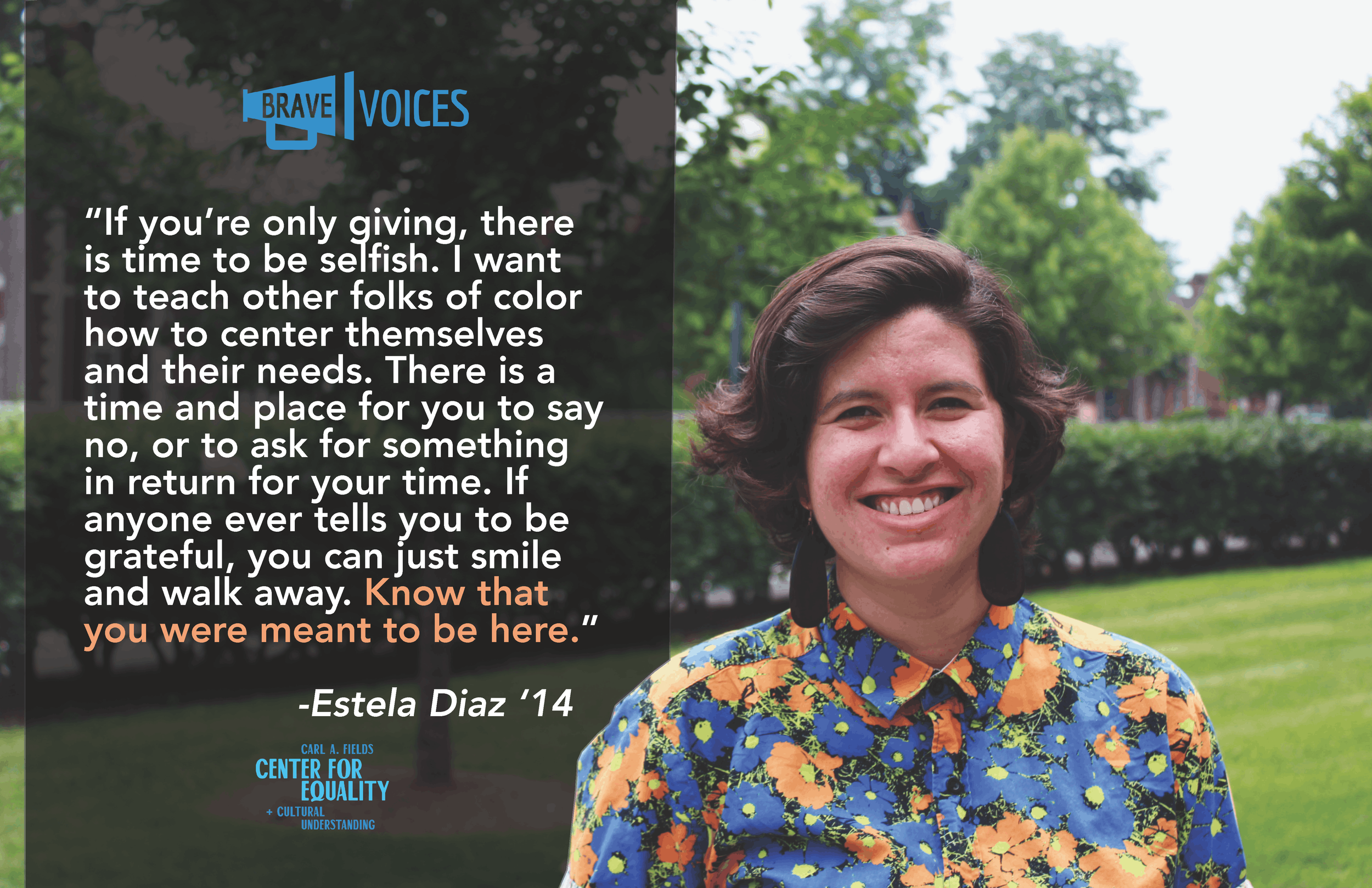
“If you’re only giving, there is time to be selfish. I want to teach other folks of color how to center themselves and their needs. There is a time and place for you to say no, or to ask for something in return for your time. If anyone ever tells you to be grateful, you can just smile and walk away. Know that you were meant to be here.” -Estela Diaz ‘14
![“I hope that [current students
of color] would just feel
comfortable, that they would
feel like everyone else, that they
would feel like they had every
advantage that a white guy has,
and there wouldn’t be kind of
this pecking order or feeling like
y](https://images.squarespace-cdn.com/content/v1/6989d84dfa66276e713bec20/21eed305-7bd0-43bf-ba39-f347f7160887/Jamie+Chen+Poster+Final.png)
“I hope that [current students of color] would just feel comfortable, that they would feel like everyone else, that they would feel like they had every advantage that a white guy has, and there wouldn’t be kind of this pecking order or feeling like you’re not going to be taken as seriously.” -Jamie Chan ‘03
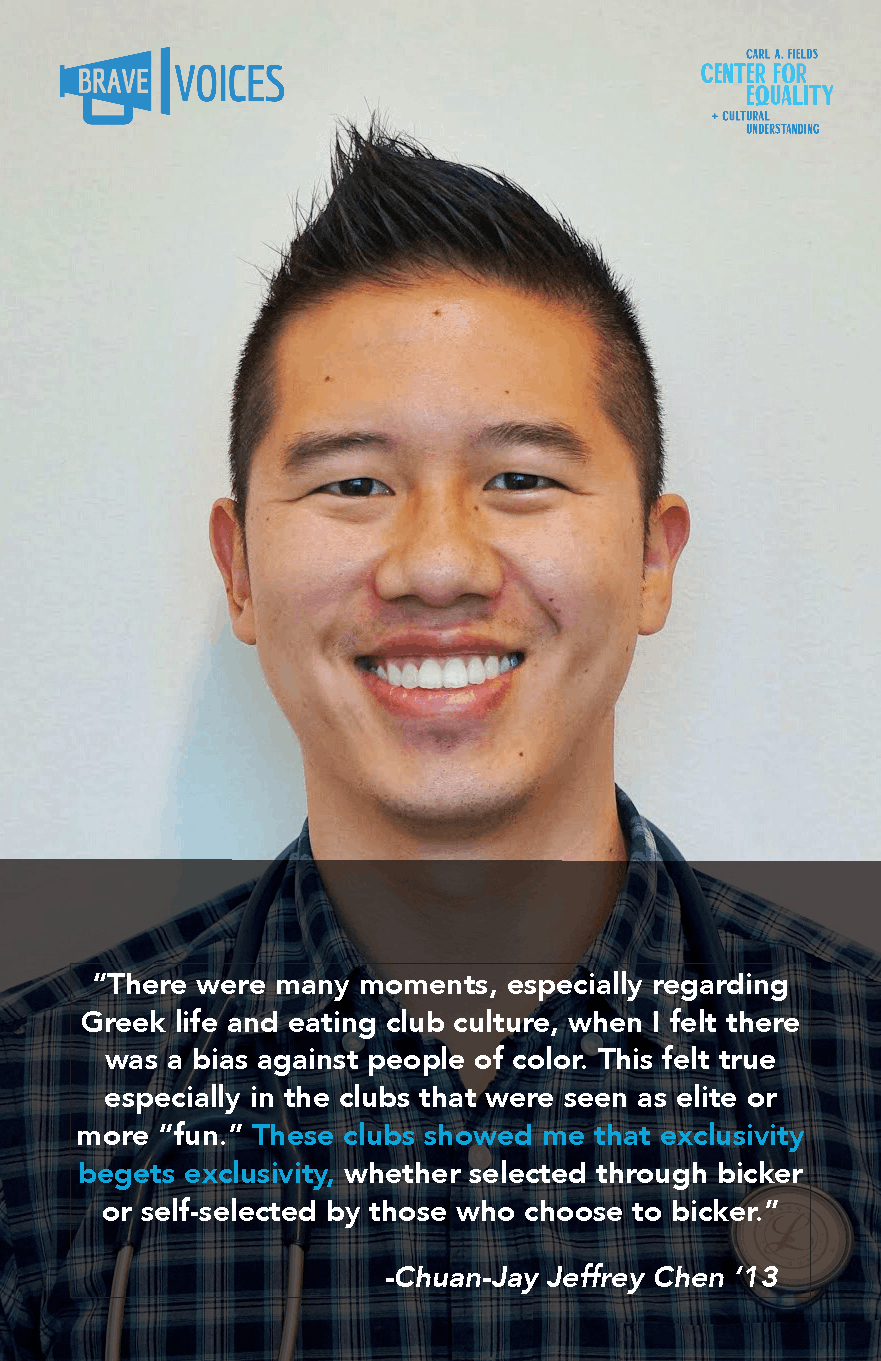
“There were many moments, especially regarding Greek life and eating club culture, when I felt there was a bias against people of color. This felt true especially in the clubs that were seen as elite or more “fun.” These clubs showed me that exclusivity begets exclusivity, whether selected through bicker or self-selected by those who choose to bicker.” -Chuan-Jay Jeffrey Chen ‘13
![“[Being a person of color at Princeton]
made me think I was actually a person
of color to begin with because it was
a very new notion to me. I was in my
community, I was arab, I was Muslim.
That’s what it is. I was in my own
bubble. I come from a pla](https://images.squarespace-cdn.com/content/v1/6989d84dfa66276e713bec20/163603a0-8e8a-4f41-878c-2a41453c490d/Jihad+Al-Jabban+Poster+Final.png)
“[Being a person of color at Princeton] made me think I was actually a person of color to begin with because it was a very new notion to me. I was in my community, I was arab, I was Muslim. That’s what it is. I was in my own bubble. I come from a place called Grand Blanc, Michigan, it’s outside of Flint, which means - it means great white in French - but also in terms of population. I think I also kind of saw myself as white too, because I didn’t face much prejudice until later in high school, so it was kind of like there wasn’t that friction I would see later on in Princeton and my later years.” -Jihad Al-Jabban ‘14
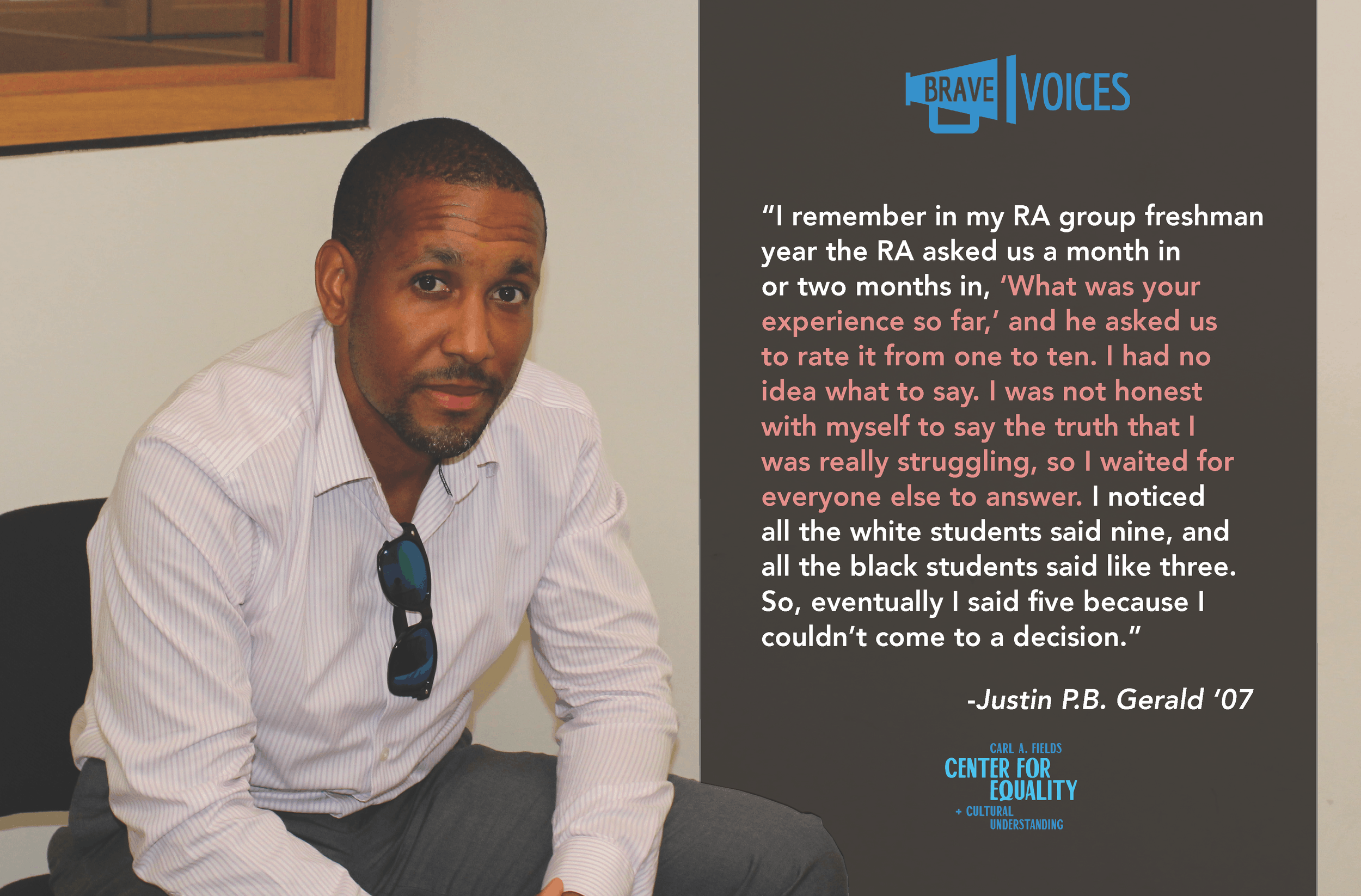
“I remember in my RA group freshman year the RA asked us a month in or two months in, ‘What was your experience so far,’ and he asked us to rate it from one to ten. I had no idea what to say. I was not honest with myself to say the truth that I was really struggling, so I waited for everyone else to answer. I noticed all the white students said nine, and all the black students said like three. So, eventually I said five because I couldn’t come to a decision.” -Justin P.B. Gerald ‘07
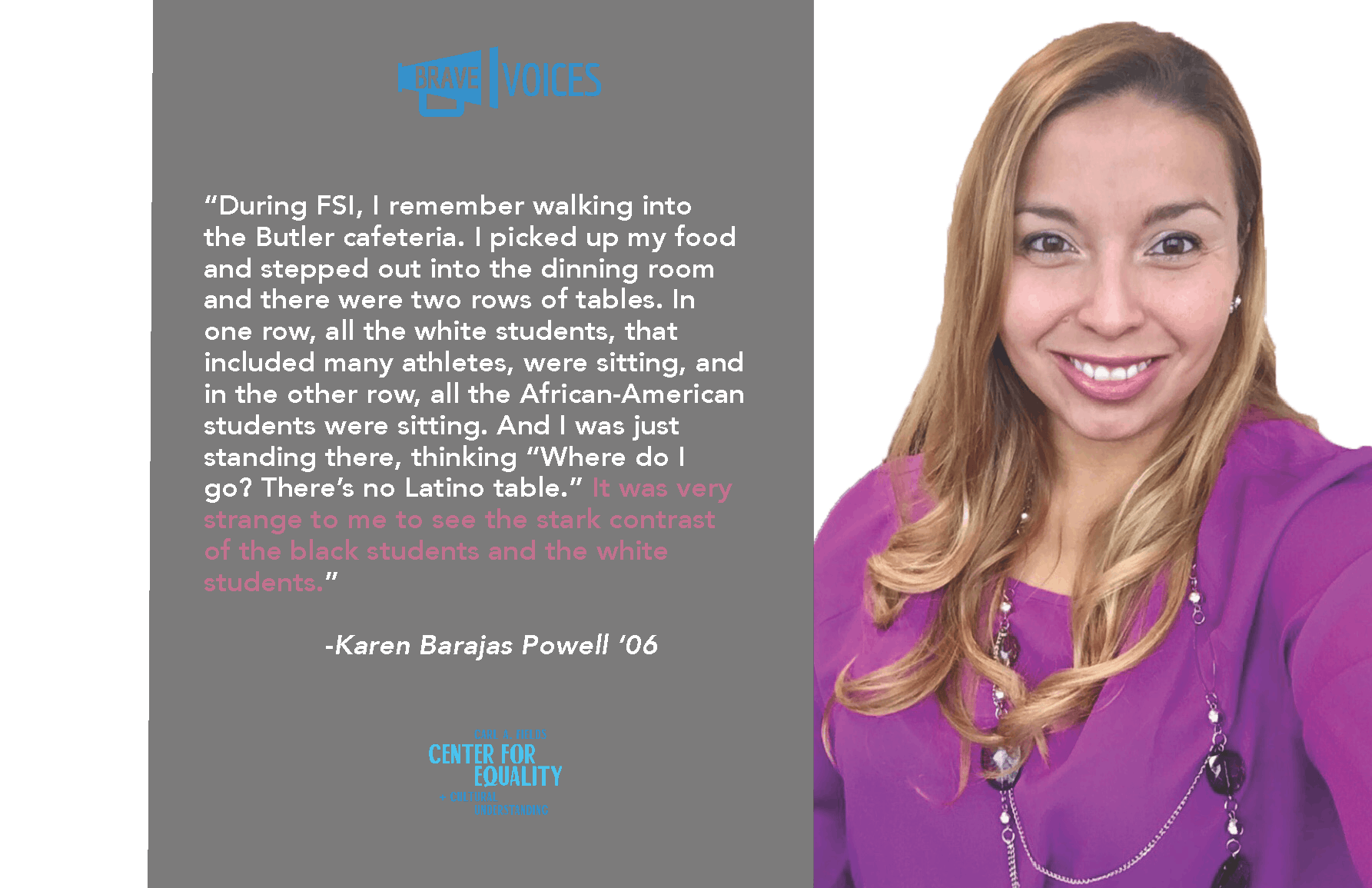
“During FSI, I remember walking into the Butler cafeteria. I picked up my food and stepped out into the dinning room and there were two rows of tables. In one row, all the white students, that included many athletes, were sitting, and in the other row, all the African-American students were sitting. And I was just standing there, thinking “Where do I go? There’s no Latino table.” It was very strange to me to see the stark contrast of the black students and the white students.” -Karen Barajas Powell ‘06
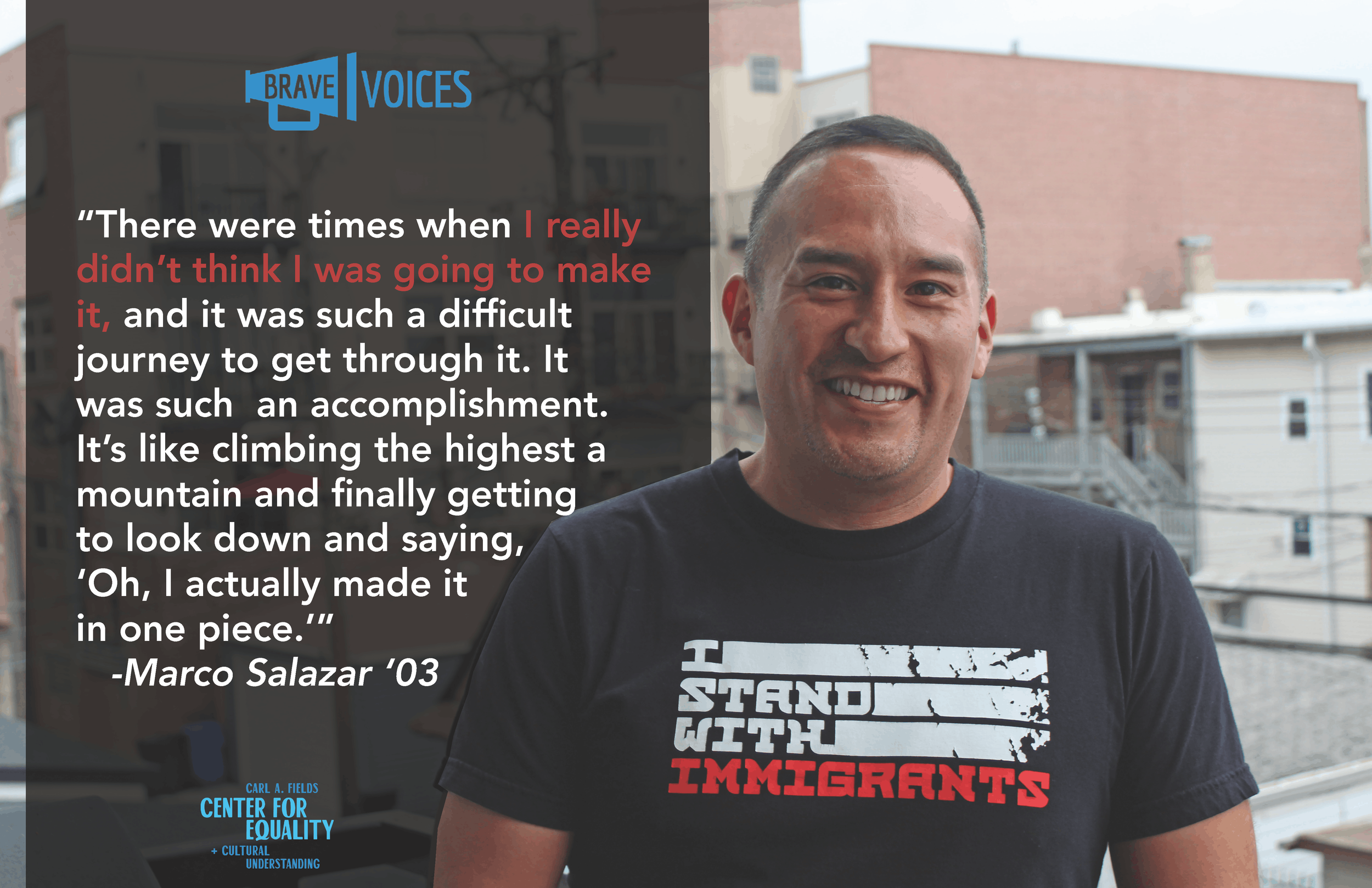
“There were times when I really didn’t think I was going to make it, and it was such a difficult journey to get through it. It was such an accomplishment. It’s like climbing the highest a mountain and finally getting to look down and saying, ‘Oh, I actually made it in one piece.’” -Marco Salazar ‘03
![“There were these people
[at Princeton] who would just
be little beacons of hope or
encouragement, and I think
that was the nice thing to
see that you didn’t need to
have one particular person
but that you found people
everywhere that could be
advoca](https://images.squarespace-cdn.com/content/v1/6989d84dfa66276e713bec20/b53c84a2-1302-4bd6-a6eb-5005fc81060d/Mickie+Cheng+Poster+Final.png)
“There were these people [at Princeton] who would just be little beacons of hope or encouragement, and I think that was the nice thing to see that you didn’t need to have one particular person but that you found people everywhere that could be advocates that were standing up and trying to help out.” -Mickie Cheng ‘94
![“I hope that [current students of color] can
find spaces to explore their own identities
and learn about their own backgrounds
through things like ethnic studies and
find places to grow in an institution that
historically has not welcomed people
of c](https://images.squarespace-cdn.com/content/v1/6989d84dfa66276e713bec20/8bddb3cf-7603-4f7e-8445-11002e6e844a/Nicholas+Wu+Poster+Final.png)
“I hope that [current students of color] can find spaces to explore their own identities and learn about their own backgrounds through things like ethnic studies and find places to grow in an institution that historically has not welcomed people of color. It was always kind of jarring for me as a former editor for the Daily Princetonian when we’d go through the newsroom and look through all of our and the stuff you’d pull up from 50, 60 years ago was really horrible.” -Nicholas Wu ‘18
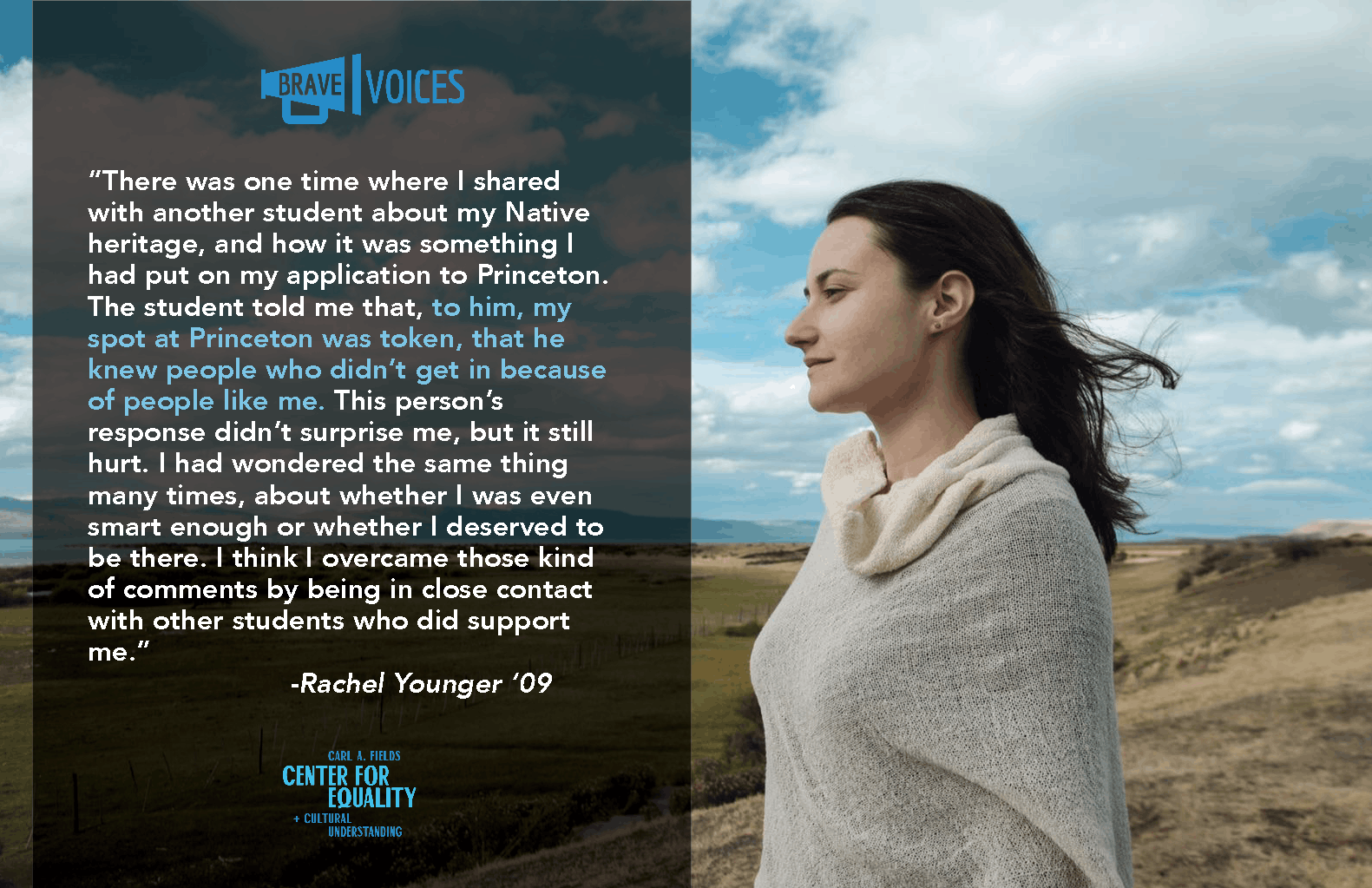
“There was one time where I shared with another student about my Native heritage, and how it was something I had put on my application to Princeton. The student told me that, to him, my spot at Princeton was token, that he knew people who didn’t get in because of people like me. This person’s response didn’t surprise me, but it still hurt. I had wondered the same thing many times, about whether I was even smart enough or whether I deserved to be there. I think I overcame those kind of comments by being in close contact with other students who did support me.” -Rachel Younger ‘09
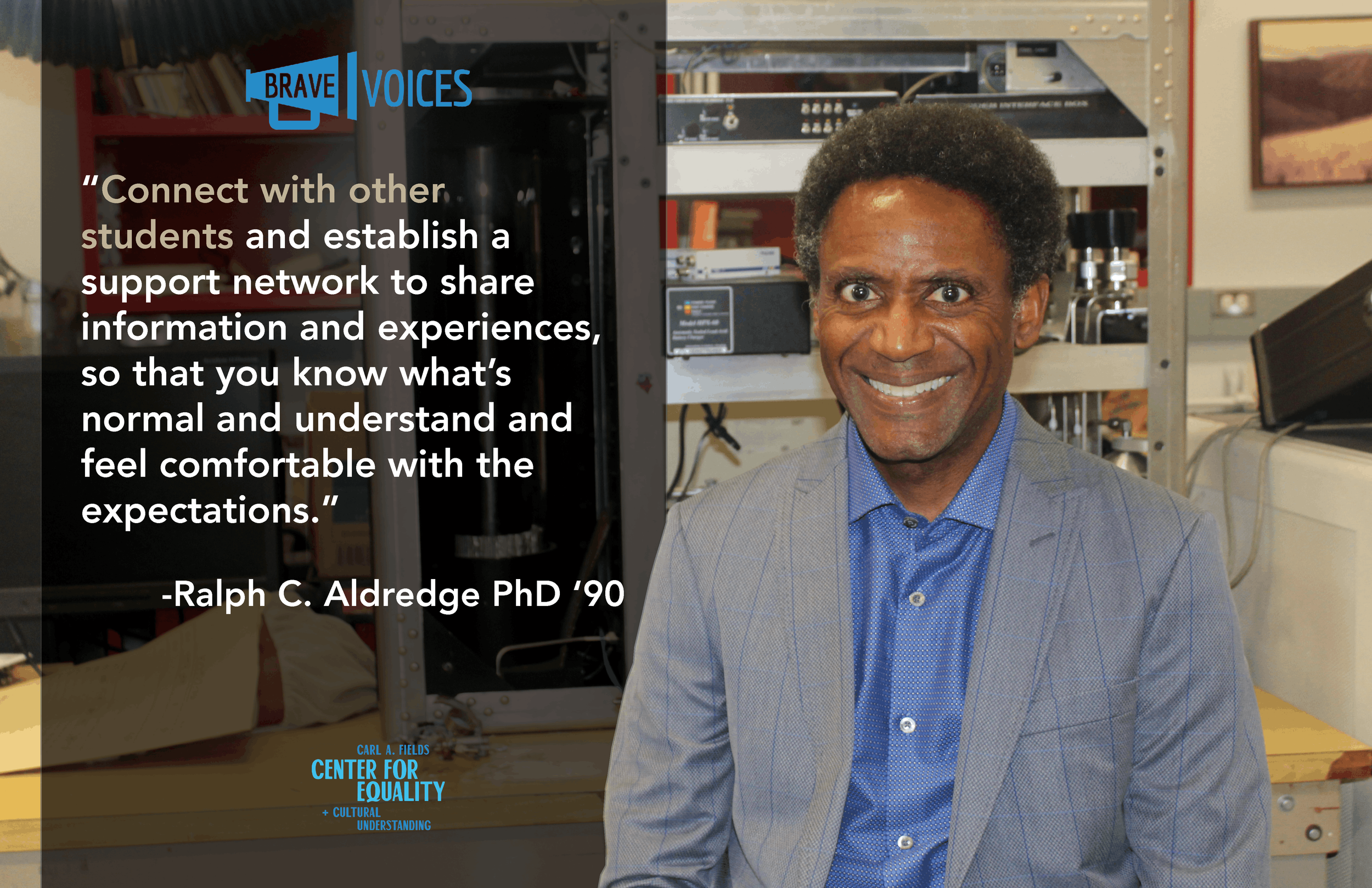
“Connect with other students and establish a support network to share information and experiences, so that you know what’s normal and understand and feel comfortable with the expectations.” -Ralph C. Aldredge PhD ‘90
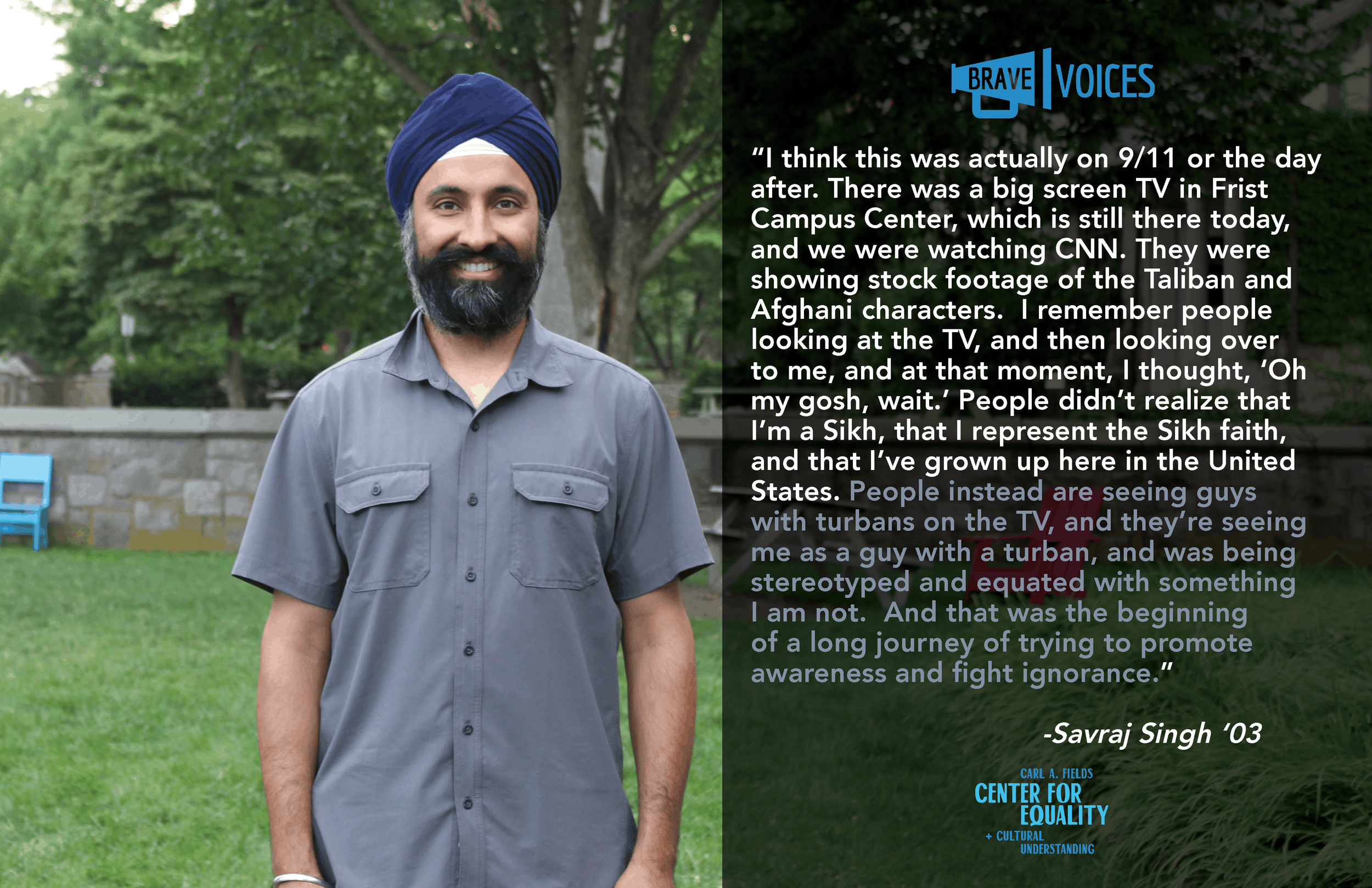
“I think this was actually on 9/11 or the day after. There was a big screen TV in Frist Campus Center, which is still there today, and we were watching CNN. They were showing stock footage of the Taliban and Afghani characters. I remember people looking at the TV, and then looking over to me, and at that moment, I thought, ‘Oh my gosh, wait.’ People didn’t realize that I’m a Sikh, that I represent the Sikh faith, and that I’ve grown up here in the United States. People instead are seeing guys with turbans on the TV, and they’re seeing me as a guy with a turban, and was being stereotyped and equated with something I am not. And that was the beginning of a long journey of trying to promote awareness and fight ignorance.”
![“I walk into a place [and] there’s
a real sense of power that I draw
by virtue of knowing that I made
it through Princeton, and that
I’m kind of part of a community
that knows what it means. When
you tell someone who’s been
through Princeton you went](https://images.squarespace-cdn.com/content/v1/6989d84dfa66276e713bec20/294622ec-e35a-4a5f-9a23-fae43cc28a76/Sitraka+St.+Micheal+Poster+Final+%281%29.png)
“I walk into a place [and] there’s a real sense of power that I draw by virtue of knowing that I made it through Princeton, and that I’m kind of part of a community that knows what it means. When you tell someone who’s been through Princeton you went to Princeton, we all know what that means.” -Sitraka St. Michael ‘11
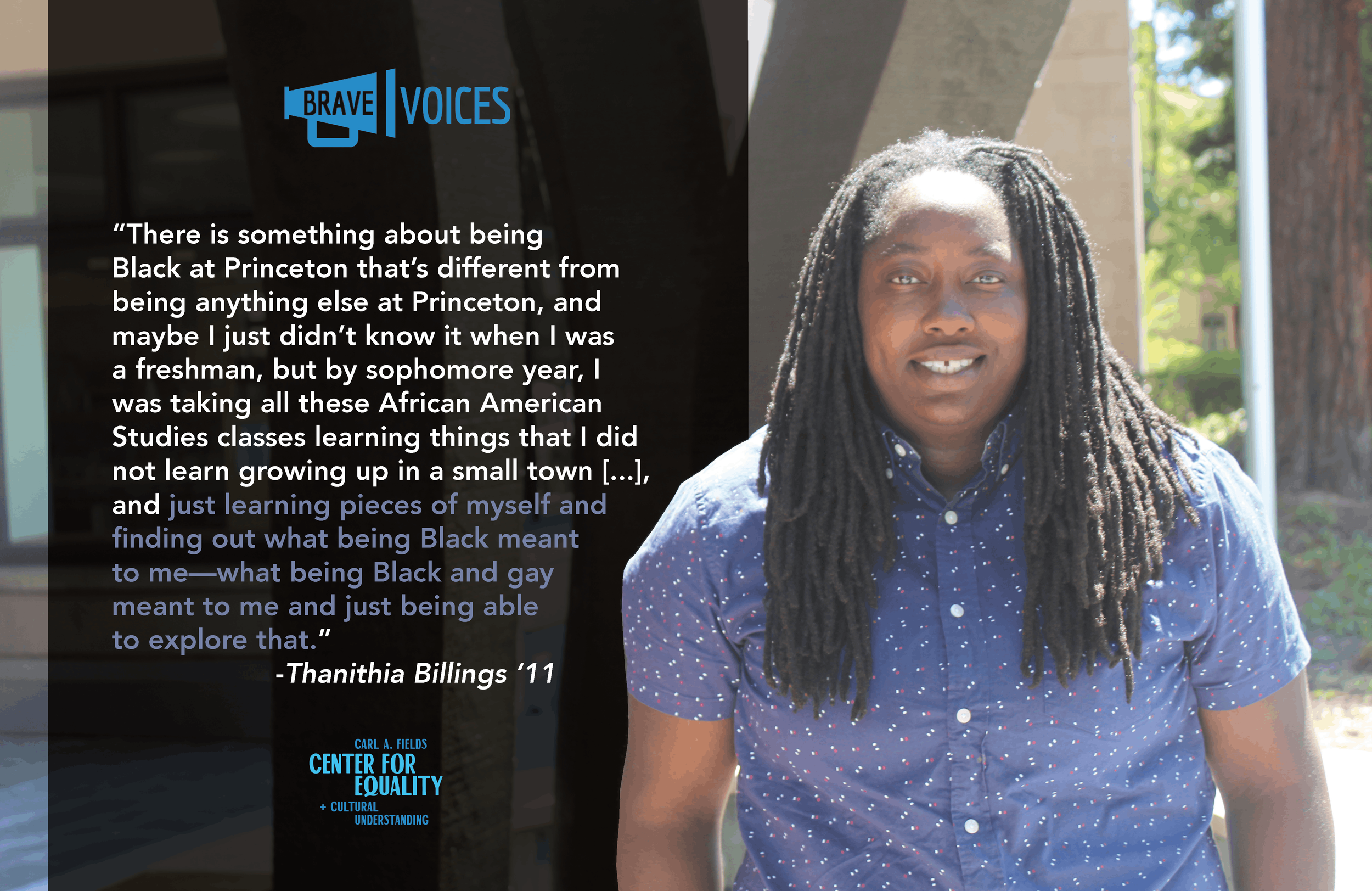
“There is something about being Black at Princeton that’s different from being anything else at Princeton, and maybe I just didn’t know it when I was a freshman, but by sophomore year, I was taking all these African American Studies classes learning things that I did not learn growing up in a small town [...], and just learning pieces of myself and finding out what being Black meant to me—what being Black and gay meant to me and just being able to explore that.” -Thanithia Billings ‘11
![“I hope that [current
students of color] can be
whomever they want to
be. I hope that they are
not just welcomed, but
that they are inherent
to the fabric of what the
Princeton community is.”
-Yaromil Ralph ‘94](https://images.squarespace-cdn.com/content/v1/6989d84dfa66276e713bec20/614edf38-ab2f-4f42-9191-26e86b7a9ebe/Yaromil+Ralph+Poster+Final+%281%29.png)
“I hope that [current students of color] can be whomever they want to be. I hope that they are not just welcomed, but that they are inherent to the fabric of what the Princeton community is.” -Yaromil Ralph ‘94
During the summer of 2018, 36 Princeton alumni of color from all over the country were interviewed. These individuals graduated between the years of 1990 to 2018. Their experiences and memories have shaped their life after Princeton. This video documentary is an effort to preserve these experiences. These are their stories…
This collection was researched, filmed, photographed, and produced by a dedicated group of Carl A. Fields Center student interns whose care and archival work laid the foundation for the Brave Voices Project: Ashley Hodges ‘21, Joice Kim ‘21, Madeleine Le Cesne ‘19, with special thanks to Nouran Ibrahim ‘19, Christina Moon ‘22, and Saran Toure ‘22. Their commitment to preserving these narratives established a lasting legacy for future storytellers.